El ajuste del impuesto al consumo de baterías de China entra en vigor en septiembre 1, 2026. Él 2% La tasa se aplica a las baterías de iones de litio y a varias otras categorías de baterías maduras antes de aumentar a 4% en septiembre 1, 2027.
Para desarrolladores de módulos de batería y fabricantes de PACK, La cuestión más importante no es simplemente el tipo impositivo.. Así es como el impuesto recorre una cadena productiva sin ser omitido, duplicado, o incluido incorrectamente en el costo del producto terminado.
El alcance del anuncio oficial cubre una unidad funcional de batería básica y grupos de baterías ensamblados a partir de una o más de dichas unidades..
La guía de implementación de la Administración Estatal de Impuestos ofrece un ejemplo específico.. Una empresa compra en octubre pilas de iones de litio a un productor de baterías 2026 y los utiliza todos en noviembre para fabricar un PACK de baterías de iones de litio.
Si la empresa obtiene la factura especial con IVA requerida con el código de producto de la batería, registra el uso de compra y producción en el Libro mayor de deducción de impuestos de baterías, y cumple con las condiciones aplicables, el impuesto sobre el consumo deducible de los insumos en el ejemplo es igual al monto de la factura multiplicado por 2%.
Este ejemplo establece un principio importante para la industria de las baterías.. Una celda gravada que ingresa a un proceso de producción de PACK sujeto a impuestos no tiene como objetivo crear automáticamente una segunda capa completa de costo fiscal..
El mecanismo de deducción está diseñado para reconocer el impuesto al consumo ya pagado por la entrada de la batería.. sin embargo, la deducción es operativa y no automática. Depende del contribuyente, transacción, factura, uso de producción real, y mantenimiento de registros.
El modelo de costos debe seguir el registro de producción
A partir de septiembre, una hoja de costos de PACK debe separar al menos tres artículos: el ajuste del precio bruto del proveedor, el importe potencialmente deducible según la regla de producción continua, y cualquier costo no deducible o relacionado con el tiempo.
Tratar los tres como un aumento permanente en el costo del material puede exagerar el costo del PACK. Ignorarlos puede subestimar los requisitos de efectivo y generar una pérdida de cotización..
La regla también crea un vínculo más fuerte entre los registros fiscales y los registros de fábrica..
Una factura de celda de batería identifica un modelo y una cantidad.. El libro de deducciones registra la compra y el uso.. El almacén registra el lote.. La orden de trabajo envía celdas a producción.. La BOM define cuantas celdas entran en cada módulo o PACK. El registro de producto terminado cierra la cadena cuantitativa.
Cuando estos registros no concilian, Es posible que el equipo comercial no sepa qué parte de un ajuste de proveedor debe permanecer en la cotización del producto terminado..
Cuatro áreas de fabricación para prepararse
Área 1: Separación de lotes.
Células compradas antes y después de septiembre. 1 debe ser identificable por el proveedor, factura, modelo, cantidad, y lote de almacén. Mezclar el inventario de transición sin registros claros dificulta la asignación de costos y la revisión de impuestos..
Área 2: BOM y precisión en la emisión de materiales.
El número real de celdas utilizadas debe coincidir con la configuración del módulo o PACK y los registros de problemas de producción.. Muestras, rehacer, chatarra, y las pruebas de ingeniería deben registrarse por separado en lugar de absorberse en una cantidad de producción estándar..
Área 3: Control de versiones de cotizaciones.
Una cotización de PACK preparada antes de septiembre puede utilizar una base de costo de celda diferente a la de una cotización emitida después de la implementación del proveedor..
Cada cotización debe llevar una fecha de validez., fecha de referencia del costo celular, supuesto de entrega, y una cláusula que cubre los cambios fiscales legales.
Área 4: Confirmación de ruta de exportación.
Las exportaciones de PACK terminados y las exportaciones directas de células pueden seguir caminos comerciales y de documentación diferentes.
Bajo el gobierno de China 2026 reglas de exportación, Los bienes de exportación elegibles pueden recibir exención del impuesto al consumo o tratamiento de reembolso.. sin embargo, El resultado depende del papel del exportador., el tratamiento del IVA de la exportación, y los documentos justificativos requeridos.
El beneficio de exportación no debe asumirse hasta que se haya confirmado la ruta de la transacción..
Las decisiones de ingeniería no deberían basarse únicamente en los impuestos
La política puede alentar a los compradores a comparar marcas de celdas de batería., formas de producto, o nuevas químicas.
sin embargo, una pequeña diferencia impositiva no debería anular los impuestos eléctricos., mecánico, térmico, Tienda M8, la seguridad, envío, y requisitos de aplicación.
Reemplazar una celda EVE o CALB con otro modelo puede cambiar las dimensiones, diseño de terminales, capacidad, resistencia interna, requisitos de compresión, barras colectoras, comportamiento de enfriamiento, y requisitos de validación.
Para módulos y PACK existentes, La respuesta más segura es revisar primero el abastecimiento y los costos y luego evaluar las alternativas mediante validación de ingeniería..
Una clasificación de amperios-hora nominalmente similar no establece intercambiabilidad. Cualquier cambio debe compararse con el diseño completo del módulo o PACK y su aplicación prevista..
Lo que los clientes deben proporcionar para obtener una cotización confiable para septiembre
Los clientes pueden reducir la incertidumbre proporcionando un paquete de RFQ estable.
El paquete debe incluir la marca y el modelo de celda de batería preferidos., alternativas aceptables, cantidades de pedido anuales e iniciales, configuración del módulo o PACK, solicitud, país de destino, ventana de entrega planificada, y término comercial.
Cuando un proyecto se extiende hasta 2027, La cita debe distinguir el actual. 2% etapa de lo programado 4% escenario.
Los requisitos técnicos claros también ayudan a evitar rediseños innecesarios.
Cuando la celda de la batería ya está fijada por un módulo aprobado, expediente de certificación, interfaz del vehículo, o calibración BMS, esa restricción debe indicarse al principio.
Cuando las celdas alternativas son aceptables, Los criterios de aceptación de ingeniería deben definirse antes de que comience la comparación de precios..
Ver
La nueva norma hace que la disciplina de fabricación sea comercialmente visible.
Trazabilidad precisa de los lotes, BUEN control, registros de emisión de materiales, y el control de versiones de cotizaciones ya no son sólo temas de gestión de fábrica. Afectan si el impuesto al consumo a nivel de celda se refleja correctamente en el precio del módulo de batería y del PACK.
La preparación más sólida es un registro conectado desde la factura del proveedor hasta el producto de batería terminado..
Qué puede hacer LYTH
LYTH puede admitir la coincidencia de modelos de celdas de batería, Módulo de batería y revisión de costos de PACK personalizado., Evaluación de ingeniería de celdas alternativas., y coordinación de BMS, térmico, y requisitos de fabricación.
Las deducciones fiscales y el tratamiento de exportación deben confirmarse frente al contribuyente real., facturas, registros de producción, y ruta de transacción.


 Integración de almacenamiento de clúster dual: Reducción de costes de hardware o arquitectura eléctrica real?
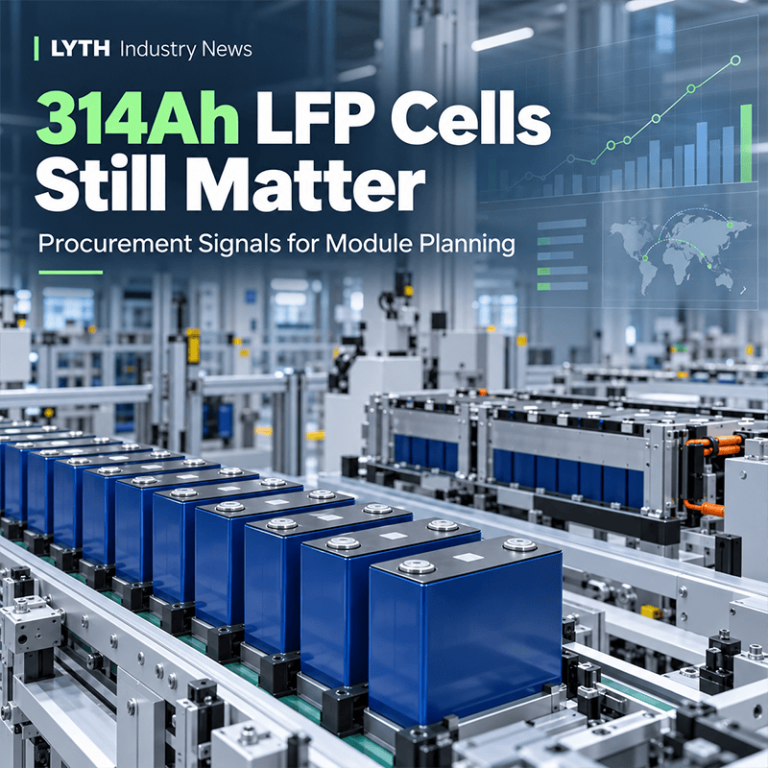 314Las celdas Ah LFP siguen siendo importantes para la planificación de módulos de batería
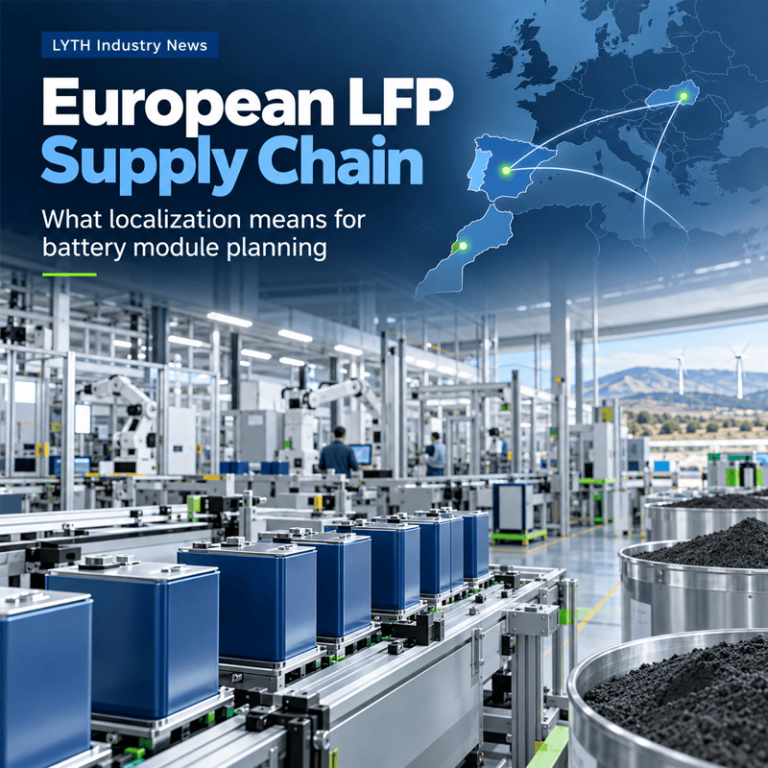 Localización de baterías LFP europeas y planificación de módulos
 Paquetes de baterías de IA para vehículos eléctricos comerciales: Qué cambia la detección a nivel celular para la integración
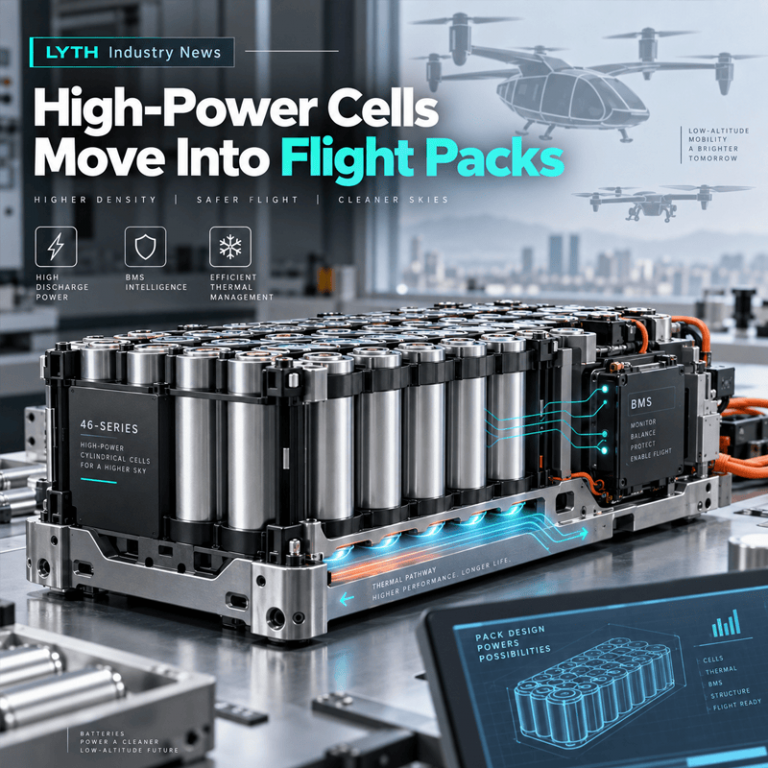 Las células de alta potencia se trasladan a paquetes de vuelo: Lo que requieren las baterías de baja altitud más allá de la capacidad