en septiembre 22, 2026, Pylontech announced that its 588Ah and 601Ah prismatic LFP cells for energy storage had entered mass production at its Hefei manufacturing base on September 21. The company said more than 100MWh of the new cells had already been produced and that the cells are being integrated into next-generation PyOcean 6.25MWh and 8MWh ESS products.
For battery module and PACK buyers, this is a meaningful development because it confirms that large-format LFP cells are continuing to move from exhibition-stage discussion into manufacturing-scale execution. sin embargo, a larger cell is not a simple drop-in upgrade. Higher amp-hour capacity changes mechanical loading, comportamiento térmico, current collection, fixture design, production handling, y capacidad de servicio.
The buyer question is direct: when a 588Ah or 601Ah cell becomes available, what must be checked before using it in a module or PACK design? The answer is that cell availability is only the first layer. Engineers still need to verify dimensions, terminal layout, requisitos de compresión, swelling allowance, coincidencia de celdas, BMS current and voltage limits, diseño de ruta térmica, distancia de aislamiento, safety venting direction, pack-level test requirements, and shipping documentation.
Large-format LFP cells can help reduce the number of cells in a battery system and may simplify some electrical connections. Al mismo tiempo, each cell becomes a larger unit of mechanical and thermal risk. A design that works with a 280Ah or 314Ah cell cannot automatically be carried over to a 588Ah or 601Ah format without redesigning fixtures, barras colectoras, sensors, lógica de protección, and test procedures.
This is especially important for companies working on light commercial storage, baterías de rack, baterías de respaldo de telecomunicaciones, and customized PACK projects. Many buyers see a large-capacity cell announcement and immediately ask whether it can reduce cost or simplify assembly. A more practical first step is to confirm whether the cell format fits the intended enclosure, whether the BMS can read and control the pack accurately, and whether the manufacturing line can maintain consistency during welding, compresión, aislamiento, and final testing.
The Pylontech announcement should therefore be read as a supply and manufacturability signal, not as a universal design instruction. It shows that the high-capacity LFP cell direction is maturing, but project adoption still depends on engineering validation at the module and PACK level.
Ver: Large-format LFP cells are commercially important because they can reshape module architecture and sourcing discussions. LYTH should treat this as an engineering evaluation topic: useful for monitoring cell-model availability, but requiring design checks before any claim of compatibility or supply readiness.
Qué puede hacer LYTH: LYTH can support battery cell model confirmation, module feasibility review, custom PACK structure discussion, Adaptación BMS, Coordinación térmica y de seguridad., and sample-stage validation planning for light ESS, respaldo de telecomunicaciones, and customized battery subsystem projects.
Fuentes:
Pylontech press release via WebDisclosure
MIIT new energy storage symposium


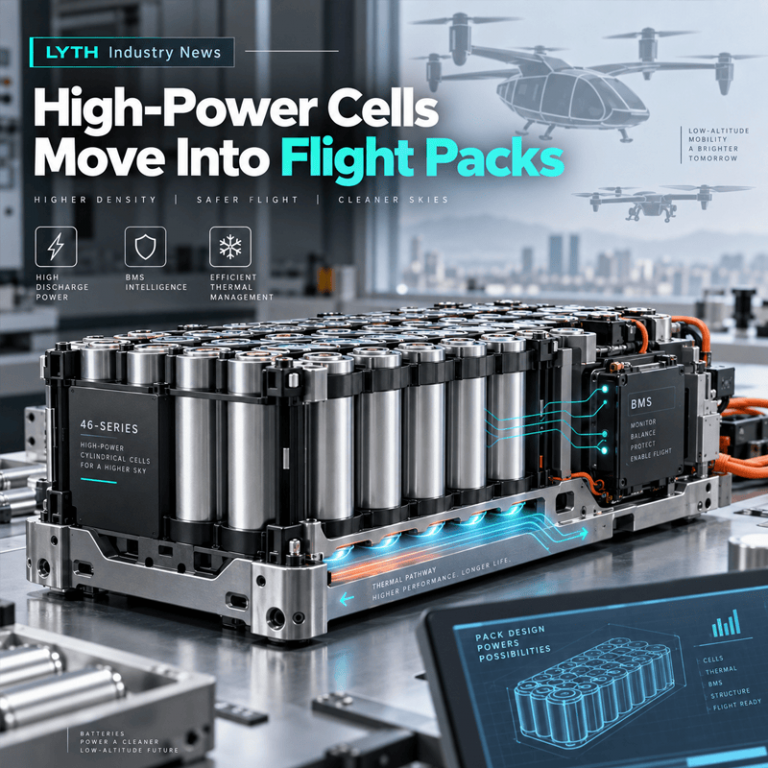 Las células de alta potencia se trasladan a paquetes de vuelo: Lo que requieren las baterías de baja altitud más allá de la capacidad
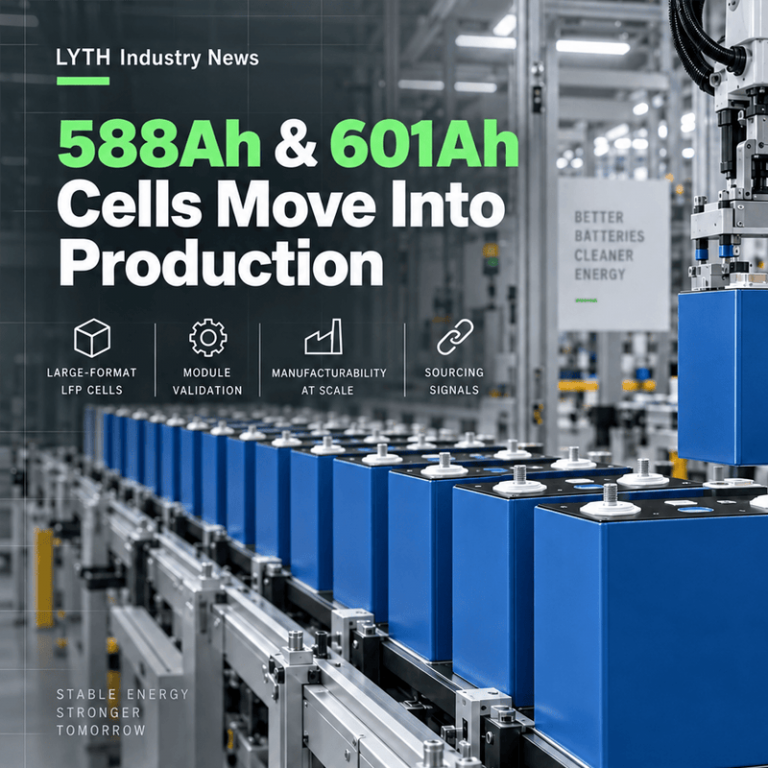 588Las celdas LFP de Ah y 601 Ah pasan de la hoja de ruta del producto a la señal de fabricación
 Fabricación localizada de PAQUETES de baterías: Lo que el acuerdo CATL-BME indica a los compradores
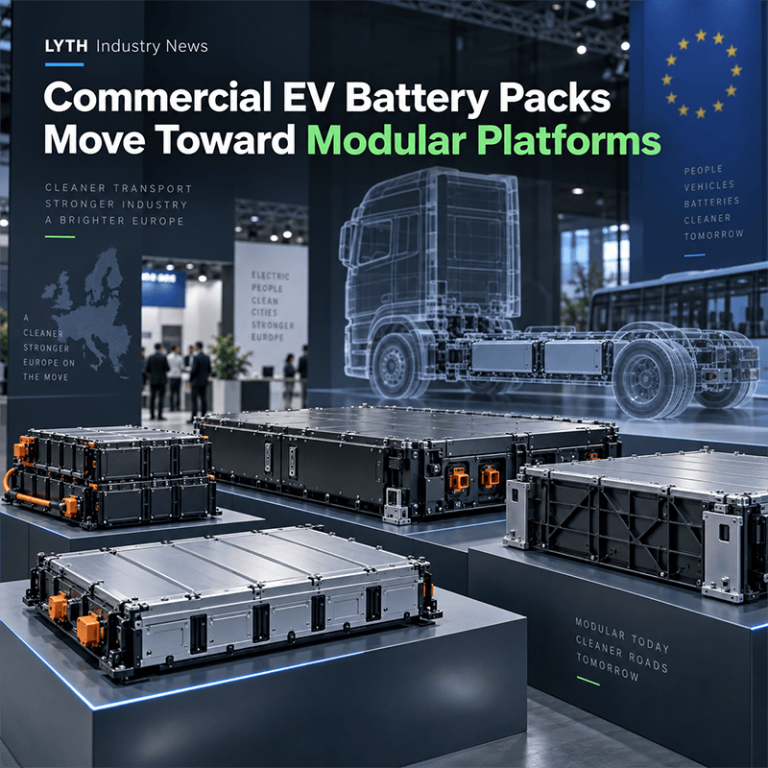 Los paquetes de baterías para vehículos eléctricos comerciales avanzan hacia plataformas modulares
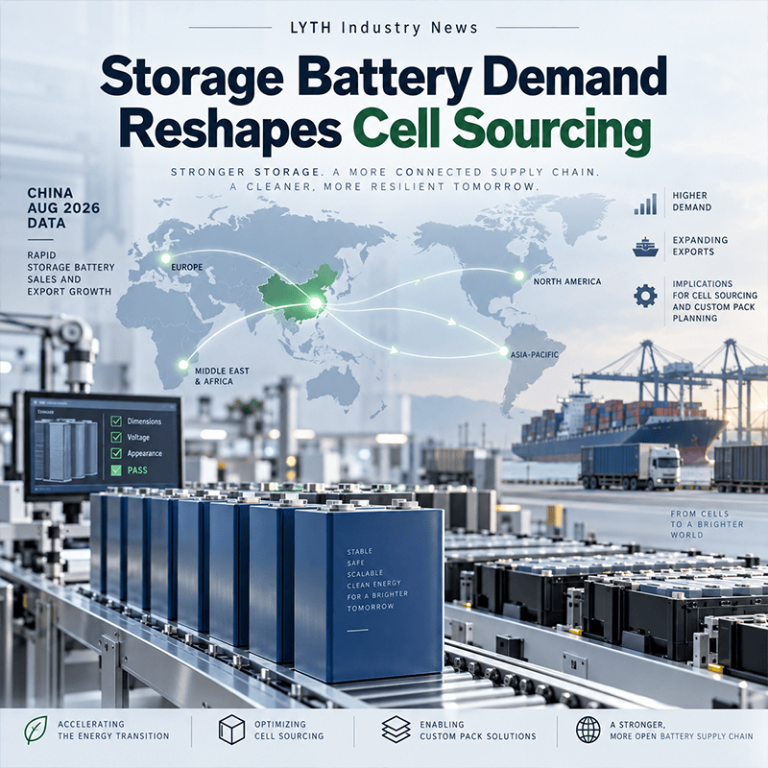 La demanda de baterías de almacenamiento se está convirtiendo en un problema de planificación de paquetes y abastecimiento de células