en septiembre 16, 2026, CATL announced a cooperation agreement with Battery Manufacturing in Egypt, or BME, to support local battery PACK assembly and production. According to the announcement, BME intends to source battery cells from CATL, while CATL will provide PACK technology licensing, production equipment, and technical training.
The planned facility will initially have an annual capacity of 1 GWh and will focus on battery packs for heavy-duty commercial vehicles. BME’s longer-term plan anticipates capacity expansion to 5 GWh and a broader product range covering passenger vehicles and renewable-energy storage applications. The factory will be financed and operated by BME, which is expected to supply local vehicle manufacturers directly. CATL’s official announcement
The commercial significance of this agreement is not limited to the announced capacity. It demonstrates that localized PACK manufacturing requires several coordinated inputs: qualified cells, controlled design data, suitable equipment, trained operators, repeatable manufacturing processes, and documented product validation. Local assembly alone does not guarantee that a battery pack will reproduce the safety, electrical performance, or service life of its reference design.
A locally manufactured PACK must first maintain control over incoming cell quality. Cell model, production batch, state of charge, resistencia interna, dimensional tolerance, and traceability can all influence module consistency. Substituting another cell, even one with a similar nominal capacity, may change busbar design, requisitos de compresión, heat distribution, BMS limits, or enclosure utilization.
The manufacturing process is equally important. Critical controls may include insulation placement, fastener torque, busbar joining, weld inspection, harness routing, cooling-interface assembly, caza de focas, electrical safety tests, firmware loading, and end-of-line functional verification. These controls must be translated into practical work instructions and inspection records that suit the equipment and workforce of the local facility.
BMS and thermal coordination also remain application-specific. A heavy commercial vehicle may experience high daily utilization, large current changes, vibración, dust, temperature variation, and limited charging windows. The battery design therefore needs to match the vehicle’s actual voltage platform, peak-power demand, charging strategy, cooling conditions, communications protocol, and fault-response requirements.
For buyers evaluating a localized PACK program, four questions deserve early attention: whether the selected cell will remain available across the program life; which design or process changes require revalidation; whether local equipment can hold the necessary tolerances; and who owns the test data, software configuration, and engineering change process.
The CATL-BME agreement also shows that localization can take place without immediate local cell manufacturing. Cells may continue to come from an established producer while module and PACK value is created closer to the application market. This model can shorten supply chains and develop regional manufacturing capability, but it increases the importance of documentation, training, trazabilidad, and disciplined change management.
Ver
Localized battery manufacturing should be evaluated as an engineering-transfer project, not simply an assembly investment. Its success depends on whether cell sourcing, diseño del módulo, BMS configuration, comportamiento térmico, production controls, and application requirements remain aligned from prototype through series production.
Qué puede hacer LYTH
LYTH can support suitable projects with battery-cell sourcing, module and PACK development, Adaptación BMS, mechanical and thermal coordination, prototype assembly, and manufacturing-oriented documentation. Final compatibility, certification, and production readiness must be confirmed against the buyer’s actual application and target market.
Fuentes: CATL English announcement · CATL Chinese announcement · Egypt State Information Service


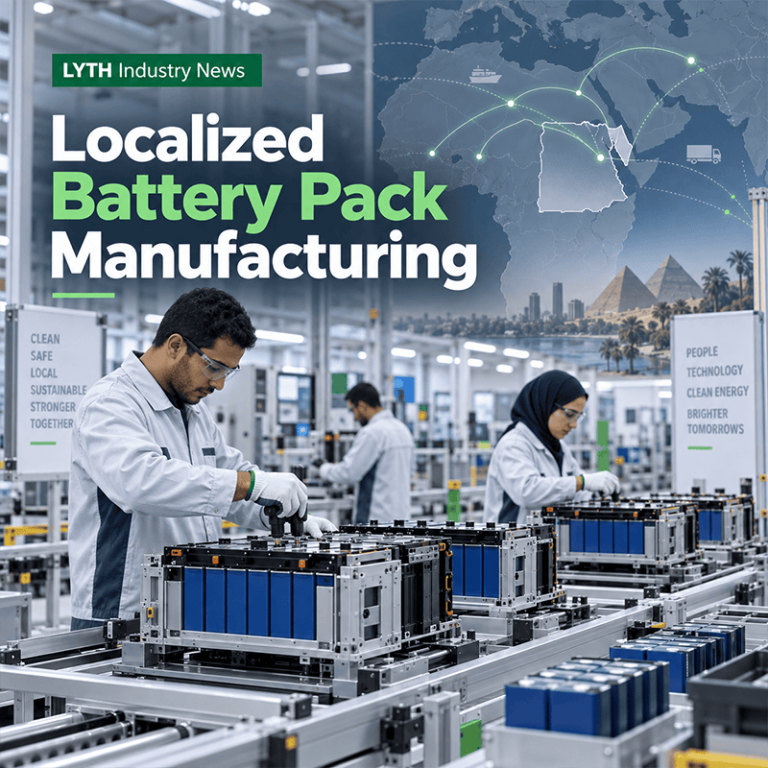 Localized Battery PACK Manufacturing: What the CATL-BME Agreement Signals for Buyers
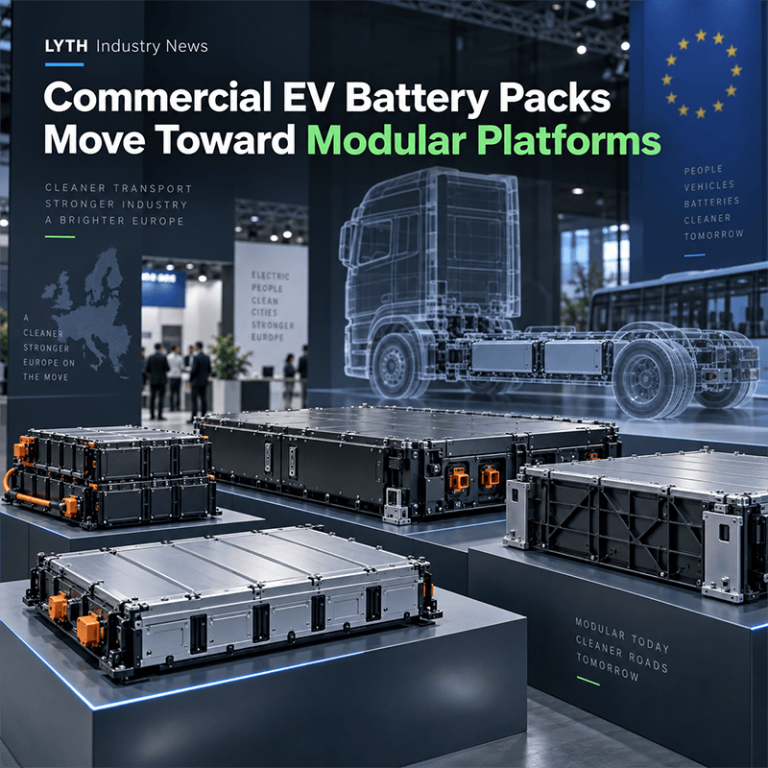 Los paquetes de baterías para vehículos eléctricos comerciales avanzan hacia plataformas modulares
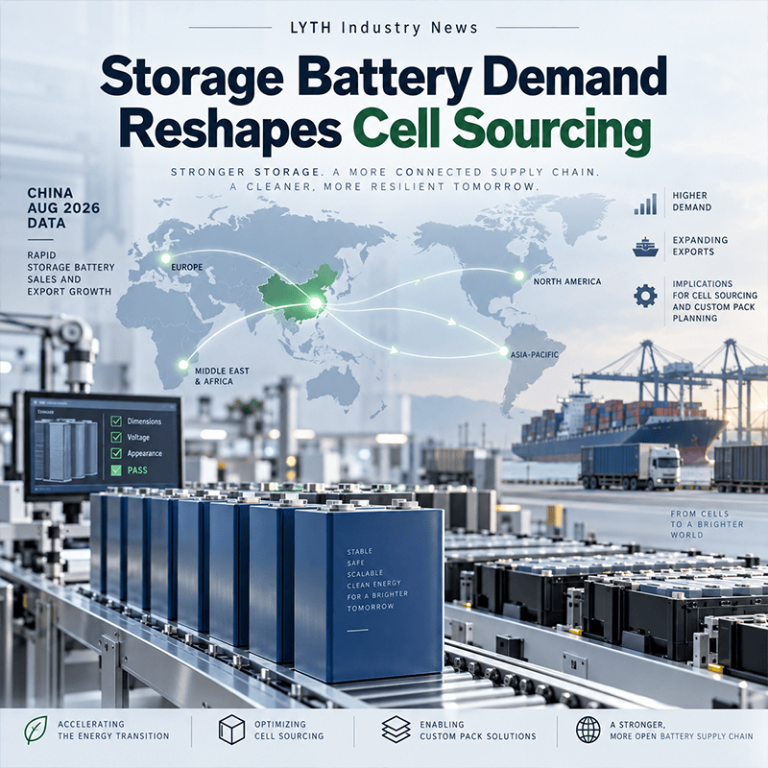 La demanda de baterías de almacenamiento se está convirtiendo en un problema de planificación de paquetes y abastecimiento de células
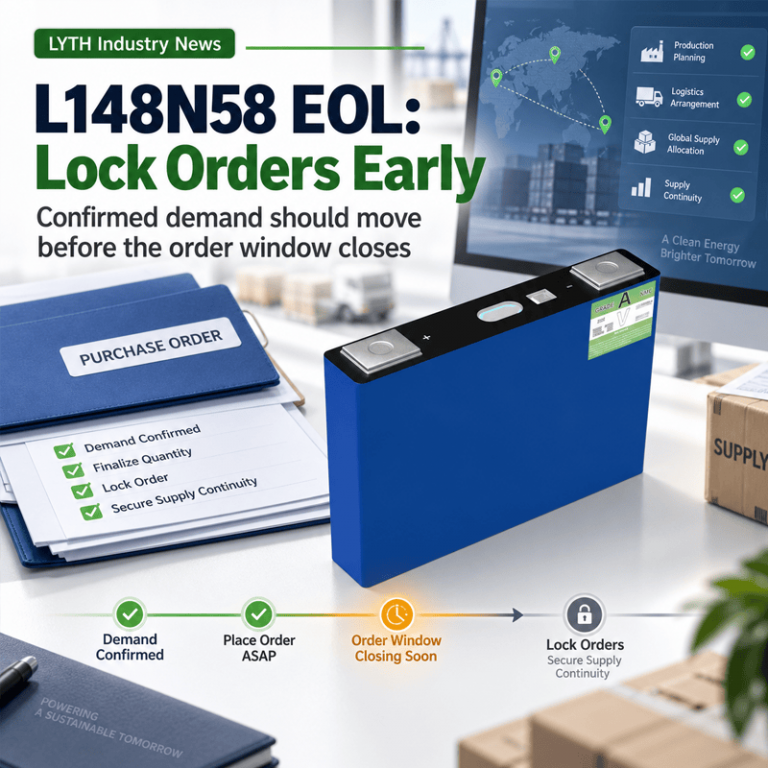 El aviso EOL de celda CALB L148N58 de 58 Ah señala una ventana de planificación de abastecimiento para los compradores de baterías
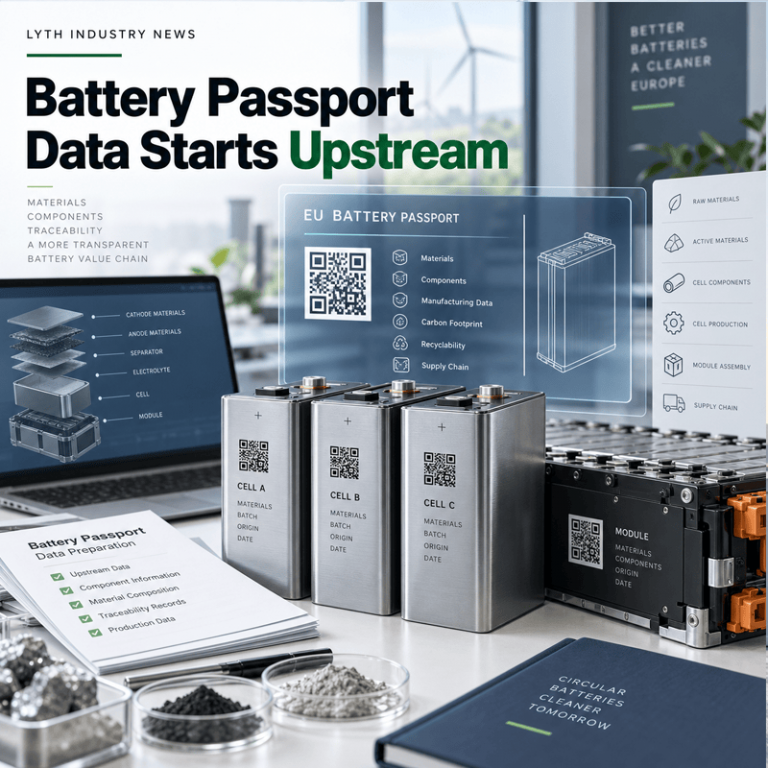 La preparación del pasaporte de batería comienza con mejores datos de batería ascendentes