Recent Chinese media coverage on September 8-9, 2026 reported that Li Auto described its battery strategy as PACK self-development and self-manufacturing, while cell development and production involve specialized manufacturing partners. The company’s response emphasized that power batteries are complex system projects and that different cell routes, product platforms, and engineering capabilities require long-term coordination.
The practical answer for battery buyers is clear: when a project uses cells from more than one manufacturing partner, the PACK definition becomes the control layer. Cell chemistry, size, rate capability, and supplier quality still matter, but the finished battery’s performance depends on how those cells are grouped, monitoreado, enfriado, protected, probado, and matched to the application.
For EV and industrial battery projects, this shifts attention from “which cell brand is used” to a wider engineering question: can the PACK maintain the same electrical behavior, safety margin, mechanical fit, and service expectation when cell batches or manufacturing partners change? That question matters for OEMs, retrofit builders, light commercial vehicle projects, and buyers using replacement EV battery modules.
A custom PACK is not only a container for cells. It is a coordinated electrical and mechanical subsystem. The BMS must match voltage windows, estrategia de equilibrio, current limits, protocolo de comunicacion, lógica de protección, and diagnostic behavior. Thermal design must account for cell spacing, caminos de calor, fast-charge behavior, estructura del recinto, and ambient operating conditions. Manufacturing must control cell matching, aislamiento, welding, compression, torque, caza de focas, traceability, and end-of-line testing.
This is why cell sourcing and PACK development should not be separated in project planning. A lower-cost or more available cell model may still require redesign of busbars, accesorios, sampling harnesses, thermal pads, enclosure clearances, BMS parameters, and validation procedures. In some cases, an alternative cell can be evaluated within the same platform. In others, the change becomes a new PACK development task.
For LYTH’s buyer base, the lesson is especially relevant. Customers asking for EV battery modules, VDA355-style modules, MEB590-related modules, or custom PACKs should define the application requirements before locking the cell model. Required voltage, capacidad, power, charge rate, interfaz de comunicación, space envelope, thermal environment, certification target, and service expectation all affect whether a cell can be used responsibly.
Ver:
The industry signal is not that every company should make cells in-house. The stronger lesson is that battery-system value is moving toward clear PACK definition and disciplined validation. Cell sourcing remains important, but a project becomes commercially reliable only when the selected cell, Tienda M8, thermal design, estructura mecanica, and manufacturing process are treated as one engineering package.
Qué puede hacer LYTH:
LYTH can support cell sourcing checks, EV battery module matching, desarrollo de PACK personalizado, Adaptación BMS, and thermal/safety coordination for defined applications. For new or alternative cells, LYTH should frame support as engineering evaluation subject to specifications, samples, validation requirements, and buyer application data.
Fuentes: Finanzas Sina / Viewpoint coverage, Finanzas Sina / Wallstreetcn coverage, Li Auto investor overview


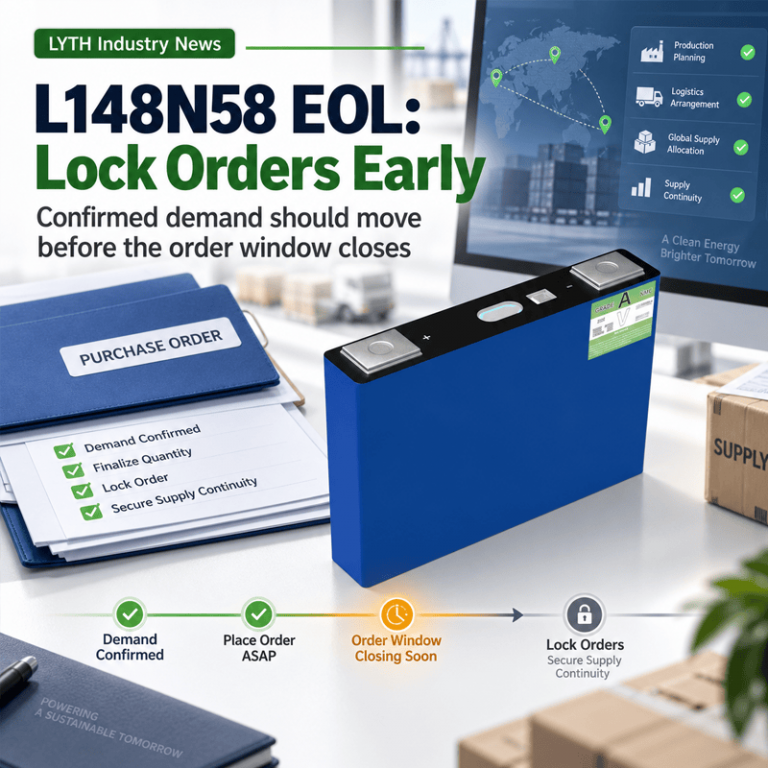 CALB L148N58 58Ah Cell EOL Notice Signals a Sourcing Planning Window for Battery Buyers
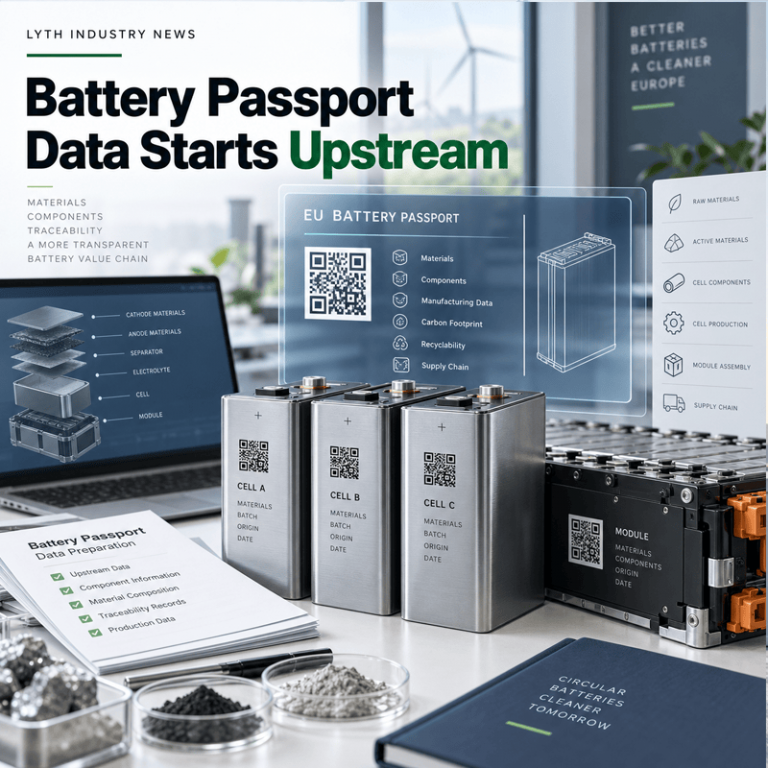 Battery Passport Readiness Starts With Better Upstream Battery Data
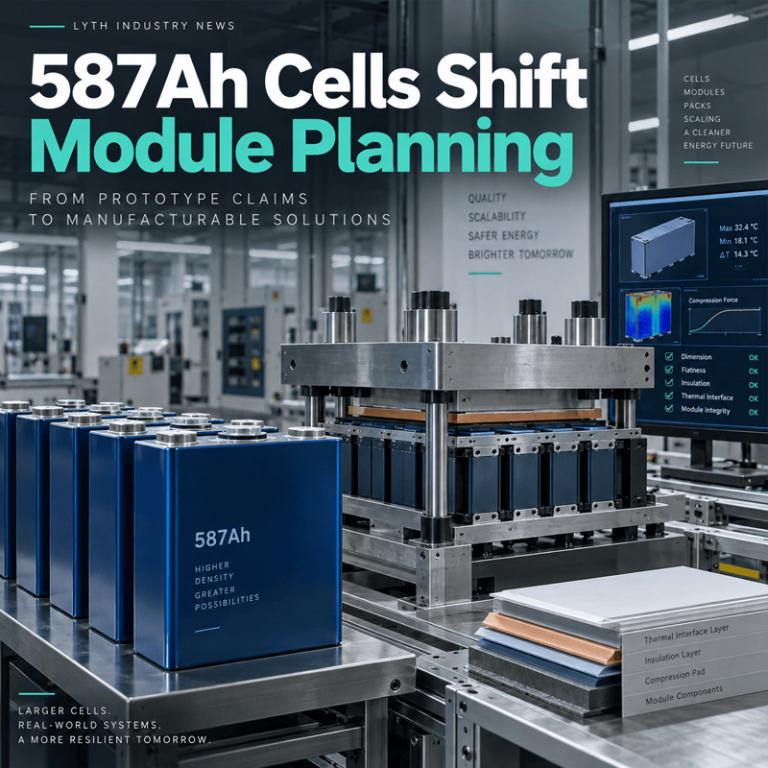 587Ah Cells Shift the Question From Capacity to Module Readiness
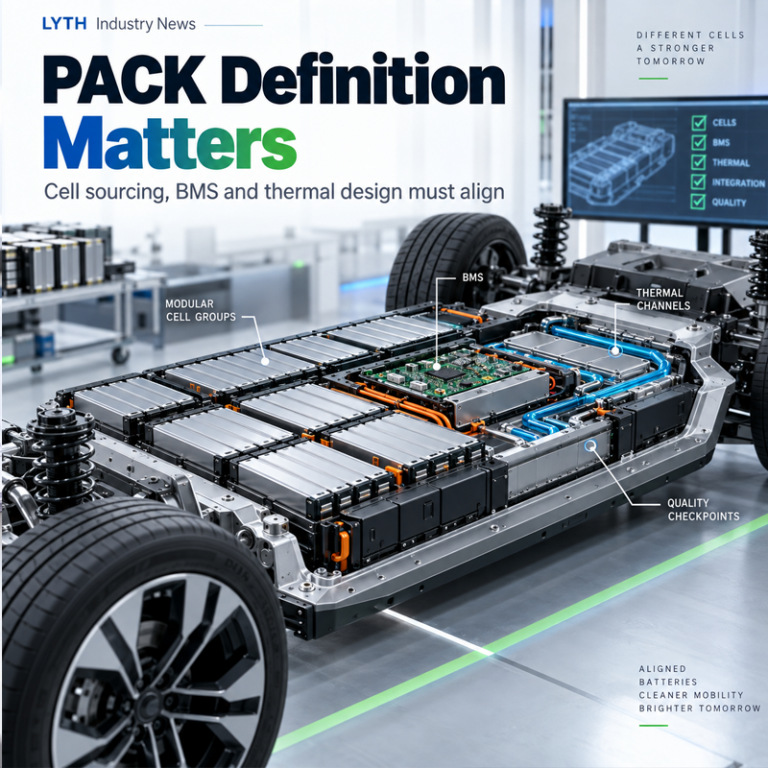 PACK Definition Matters as Automakers Separate Cell Supply From Battery-System Control
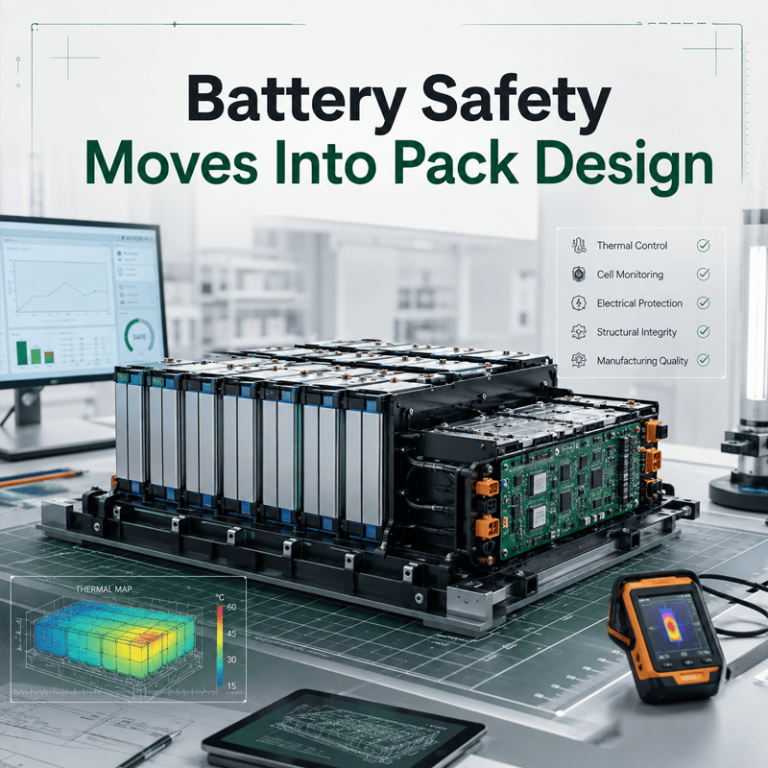 La seguridad de las baterías pasa al diseño de PACK a medida que China refuerza el control de riesgos de las baterías de vehículos eléctricos de cadena completa