En septembre 22, 2026, Pylontech a annoncé que ses cellules LFP prismatiques de 588 Ah et 601 Ah pour le stockage d'énergie étaient entrées en production de masse dans sa base de fabrication de Hefei en septembre. 21. La société a déclaré que plus de 100 MWh de nouvelles cellules avaient déjà été produites et que les cellules étaient en cours d'intégration dans les produits PyOcean de nouvelle génération 6,25 MWh et 8 MWh ESS..
For battery module and PACK buyers, this is a meaningful development because it confirms that large-format LFP cells are continuing to move from exhibition-stage discussion into manufacturing-scale execution. toutefois, a larger cell is not a simple drop-in upgrade. Higher amp-hour capacity changes mechanical loading, comportement thermique, current collection, fixture design, production handling, et la facilité d'entretien.
The buyer question is direct: when a 588Ah or 601Ah cell becomes available, what must be checked before using it in a module or PACK design? The answer is that cell availability is only the first layer. Engineers still need to verify dimensions, disposition des terminaux, exigences de compression, swelling allowance, correspondance de cellules, BMS current and voltage limits, thermal path design, insulation distance, safety venting direction, pack-level test requirements, and shipping documentation.
Large-format LFP cells can help reduce the number of cells in a battery system and may simplify some electrical connections. En même temps, each cell becomes a larger unit of mechanical and thermal risk. A design that works with a 280Ah or 314Ah cell cannot automatically be carried over to a 588Ah or 601Ah format without redesigning fixtures, jeux de barres, sensors, logique de protection, and test procedures.
This is especially important for companies working on light commercial storage, rack batteries, batteries de secours pour télécommunications, and customized PACK projects. Many buyers see a large-capacity cell announcement and immediately ask whether it can reduce cost or simplify assembly. A more practical first step is to confirm whether the cell format fits the intended enclosure, whether the BMS can read and control the pack accurately, and whether the manufacturing line can maintain consistency during welding, compression, isolation, and final testing.
The Pylontech announcement should therefore be read as a supply and manufacturability signal, not as a universal design instruction. It shows that the high-capacity LFP cell direction is maturing, but project adoption still depends on engineering validation at the module and PACK level.
Voir LYTH: Large-format LFP cells are commercially important because they can reshape module architecture and sourcing discussions. LYTH should treat this as an engineering evaluation topic: useful for monitoring cell-model availability, but requiring design checks before any claim of compatibility or supply readiness.
Ce que LYTH peut faire: LYTH can support battery cell model confirmation, module feasibility review, custom PACK structure discussion, Adaptation GTB, coordination thermique et sécurité, and sample-stage validation planning for light ESS, sauvegarde des télécommunications, and customized battery subsystem projects.
Sources:
Pylontech press release via WebDisclosure
MIIT new energy storage symposium


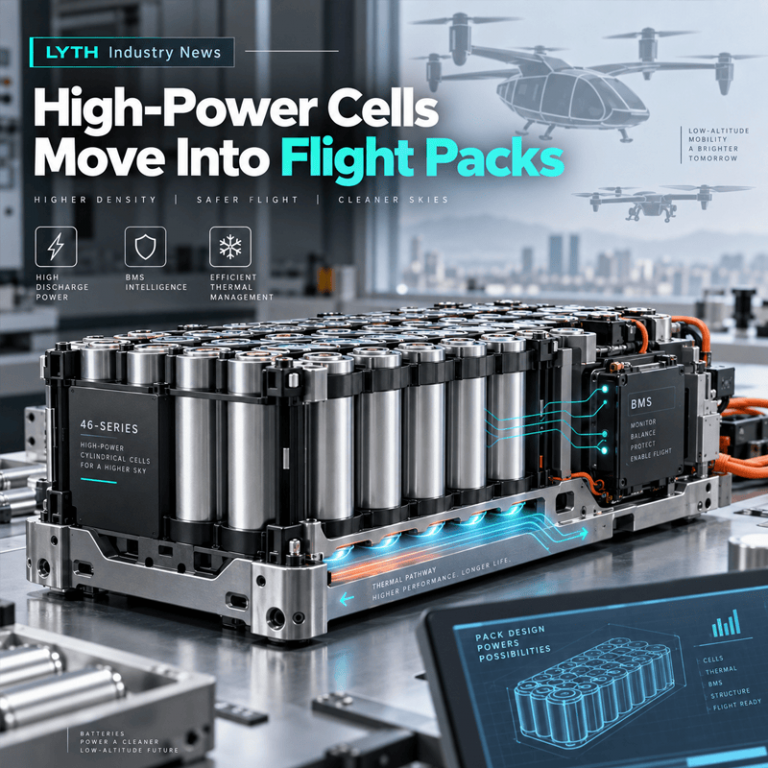 Les cellules haute puissance sont intégrées aux packs de vol: Ce dont les batteries à basse altitude ont besoin au-delà de leur capacité
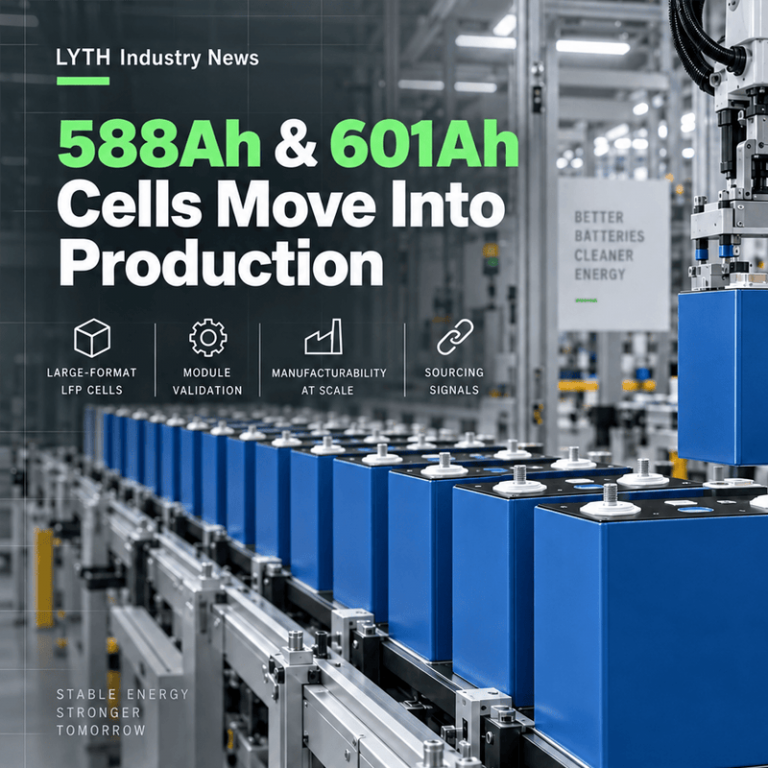 588Les cellules LFP Ah et 601 Ah passent de la feuille de route du produit au signal de fabrication
 Fabrication localisée de PACKS de batteries: Ce que l’accord CATL-BME signifie pour les acheteurs
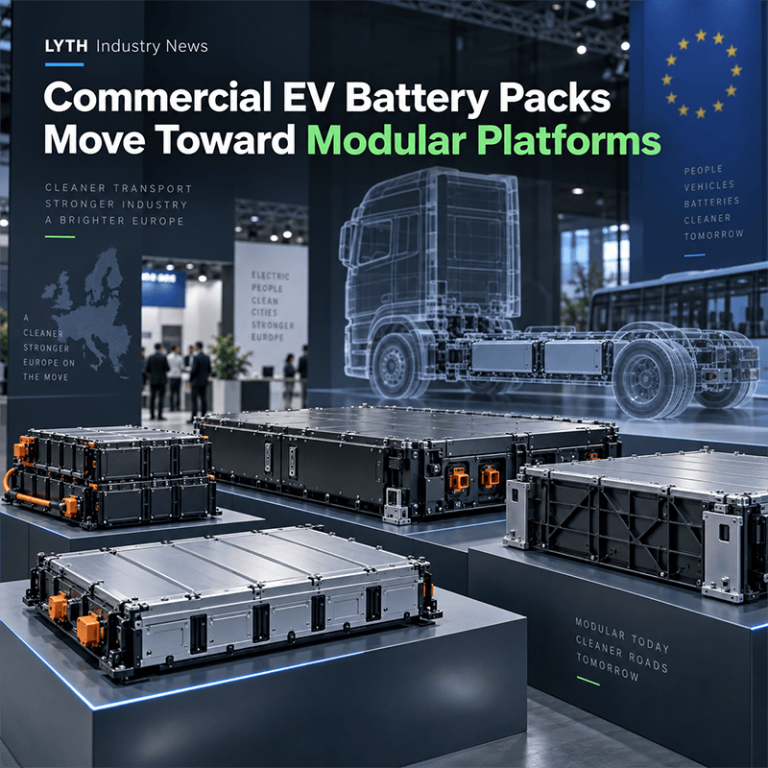 Les batteries de véhicules électriques commerciaux évoluent vers des plates-formes modulaires
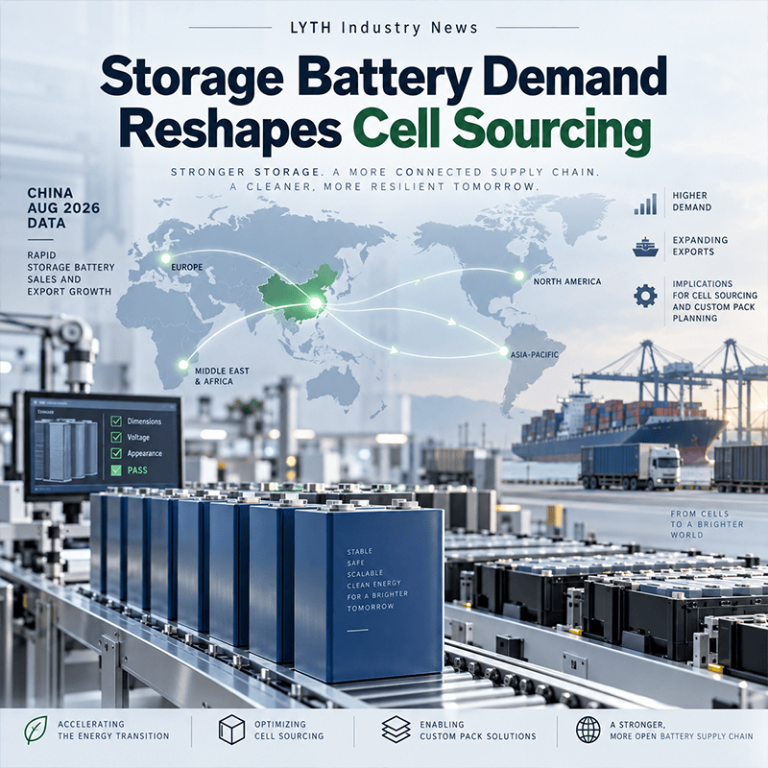 La demande de batteries de stockage devient un problème d’approvisionnement en cellules et de planification des PACKS