La conformità delle batterie si sta spostando dalla documentazione di certificazione finale alla progettazione del prodotto, selezione dei fornitori, e gestione dei dati di produzione. Il documento guida della Commissione Europea, versione 1.0 datato luglio 28, 2026, definisce i punti dati del Digital Battery Passport per categoria per le batterie dei veicoli elettrici, mezzi leggeri di trasporto batterie, e batterie industriali.
Il documento non sostituisce il Regolamento Batteria stesso, ma offre alla catena del valore delle batterie una visione più chiara delle informazioni che gli operatori economici potrebbero aver bisogno di raccogliere e strutturare. I punti dati elencati includono identificatori univoci, informazioni sul produttore, categoria della batteria, identificazione del modello, luogo di produzione, data di produzione, peso, capacità, chimica, sostanze pericolose, parametri di tensione, capacità di potenza, durata prevista, informazioni sulla conformità, informazioni sullo smantellamento, e dati selezionati sullo stato di salute o sulle prestazioni, ove applicabile.
Per modulo e PACK acquirenti, questo è importante perché le prove di conformità non vengono create alla fine di un progetto. Dipende se il fornitore è in grado di conservare registrazioni accurate dalla selezione delle celle all'assemblaggio dei moduli e all'integrazione del pacco. Un acquirente che intende vendere in Europa potrebbe aver bisogno della tracciabilità del modello di batteria, lotto, chimica, capacità, intervallo di tensione, struttura dei componenti, informazioni sullo smontaggio, e caratteristiche prestazionali.
La guida chiarisce inoltre che la documentazione è collegata alla realtà ingegneristica. Per esempio, le informazioni sullo smantellamento dipendono dalla struttura fisica dell'imballaggio, metodo di fissaggio, disposizione delle cellule, progettazione dell'accesso al servizio, e avvertenze di sicurezza. I dati sulle prestazioni dipendono dal modello di cella selezionato, Strategia di misurazione del BMS, procedura di prova, e come vengono definiti i limiti operativi. Ciò significa che la preparazione del passaporto della batteria non è solo una questione legale o amministrativa; fa parte dell'architettura del prodotto.
Per acquirenti internazionali, l’approccio più sicuro è coinvolgere i fornitori di batterie nelle prime fasi del progetto. Prima di confermare il design di un modulo o di un pacchetto, gli acquirenti dovrebbero chiarire il mercato di riferimento, categoria della batteria, tensione nominale, capacità, chimica, applicazione, ambiente operativo, aspettative di servibilità, e le esigenze di documentazione. Ciò aiuta a ridurre il rischio di riprogettazione ed evita di scoprire lacune nei dati di conformità dopo la creazione degli strumenti, campionamento, o preparazione della spedizione.
Vista LYTH
La disponibilità di Battery Passport rafforza il valore del modulo disciplinato e PACK ingegneria. LYTH dovrebbe posizionare questo argomento come guida per l'acquirente: il giusto partner per le batterie dovrebbe supportare non solo l’approvvigionamento delle celle e l’assemblaggio dei pacchi, ma anche informazioni strutturate sui prodotti, consapevolezza della tracciabilità, e coordinamento della documentazione pratica.
Cosa può fare LYTH
LYTH può aiutare i clienti a definire il modulo batteria e la personalizzazione PACK requisiti relativi all'applicazione, piattaforma di tensione, capacità, modello cellulare, Funzione BMS, disposizione meccanica, coordinamento della sicurezza, esigenze di spedizione, e preparazione della documentazione di esportazione. LYTH non dovrebbe pretendere di rilasciare approvazioni normative dell’UE, ma può supportare una raccolta di dati tecnici più pulita per i flussi di lavoro di conformità dei clienti.
Fonti
Commissione europea: Punti dati del passaporto delle batterie digitali per categoria, versione 1.0, luglio 28, 2026
EUR-Lex: Regole di sostenibilità per batterie e batterie usate


 La domanda di batterie di accumulo sta diventando un problema di approvvigionamento cellulare e di pianificazione del PACK
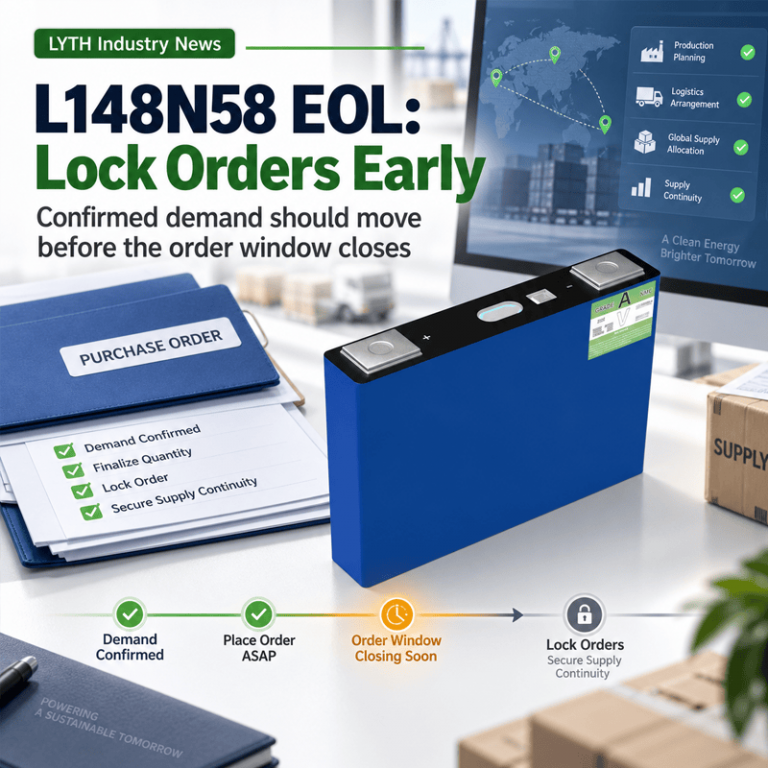 L'avviso EOL cella CALB L148N58 da 58 Ah segnala una finestra di pianificazione dell'approvvigionamento per gli acquirenti di batterie
 La preparazione del Battery Passport inizia con migliori dati a monte della batteria
 587Le celle Ah spostano la questione dalla capacità alla disponibilità del modulo
 La definizione di PACK è importante poiché le case automobilistiche separano l'alimentazione delle celle dal controllo del sistema batteria