Battery compliance is moving from final certification paperwork into product design, supplier selection, and manufacturing data management. The European Commission’s guidance document, version 1.0 dated July 28, 2026, sets out Digital Battery Passport data points by category for electric vehicle batteries, light means of transport batteries, and industrial batteries.
The document does not replace the Battery Regulation itself, but it gives the battery value chain a clearer view of the information that economic operators may need to collect and structure. The listed data points include unique identifiers, manufacturer information, battery category, model identification, manufacturing location, manufacturing date, Lester, capacité, chimie, hazardous substances, voltage parameters, power capability, expected lifetime, conformity information, dismantling information, and selected state-of-health or performance data where applicable.
For module and PACK buyers, this is important because compliance evidence is not created at the end of a project. It depends on whether the supplier can maintain accurate records from cell selection through module assembly and pack integration. A buyer who plans to sell into Europe may need traceability for the battery model, batch, chimie, capacité, voltage range, component structure, disassembly information, and performance characteristics.
The guidance also makes clear that documentation is connected to engineering reality. Mais il a un prix plus élevé, dismantling information depends on the physical pack structure, fastening method, cell layout, service access design, and safety warnings. Performance data depends on the selected cell model, BMS measurement strategy, test procedure, and how operating limits are defined. This means battery-passport readiness is not only a legal or administrative topic; it is part of product architecture.
Pour les acheteurs internationaux, the safest approach is to involve battery suppliers earlier in the project. Before confirming a module or pack design, buyers should clarify target market, battery category, tension nominale, capacité, chimie, application, operating environment, serviceability expectations, and documentation needs. This helps reduce redesign risk and avoids discovering compliance data gaps after tooling, sampling, or shipment preparation.
Voir LYTH
Battery Passport readiness strengthens the value of disciplined module and PACK engineering. LYTH should position this topic as buyer guidance: the right battery partner should support not only cell sourcing and pack assembly, but also structured product information, traceability awareness, and practical documentation coordination.
Ce que LYTH peut faire
LYTH can help customers define battery module and custom PACK requirements around application, voltage platform, capacité, modèle de cellule, BMS function, mechanical layout, safety coordination, shipment needs, and export documentation preparation. LYTH should not claim to issue EU regulatory approvals, but can support cleaner technical data collection for customer compliance workflows.
Sources
European Commission: Digital Batteries Passport data points by category, version 1.0, juillet 28, 2026
EUR-Lex: Sustainability rules for batteries and waste batteries


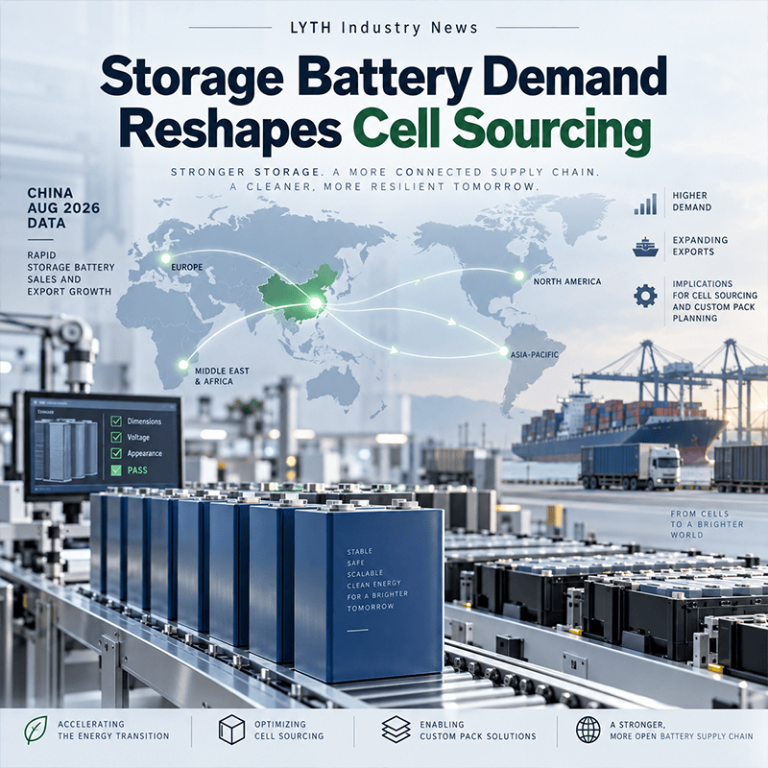 La demande de batteries de stockage devient un problème d’approvisionnement en cellules et de planification des PACKS
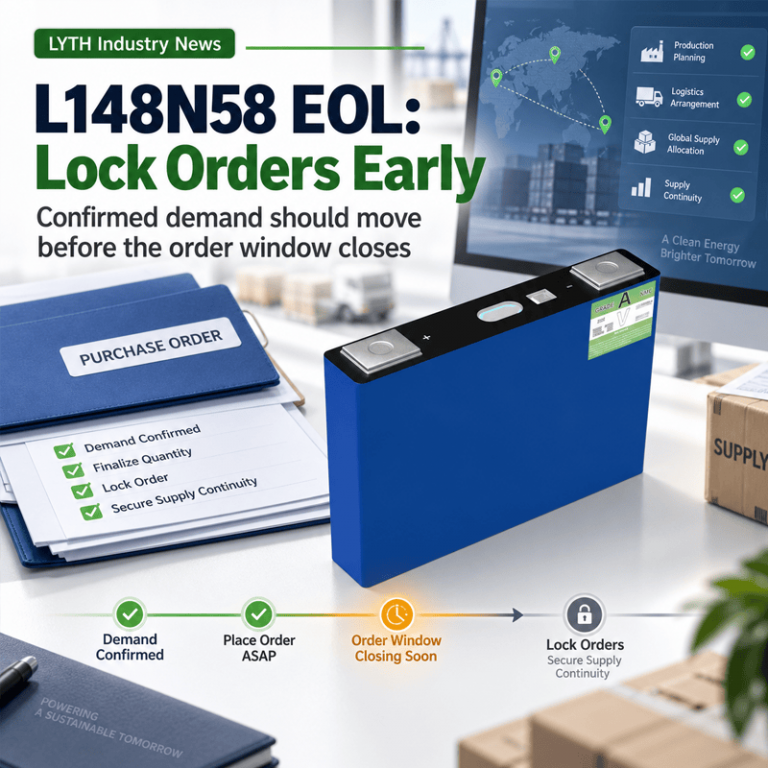 L'avis EOL de cellule CALB L148N58 58 Ah signale une fenêtre de planification d'approvisionnement pour les acheteurs de batteries
 La préparation au passeport de batterie commence par de meilleures données de batterie en amont
 587Ah Cells déplace la question de la capacité vers la préparation des modules
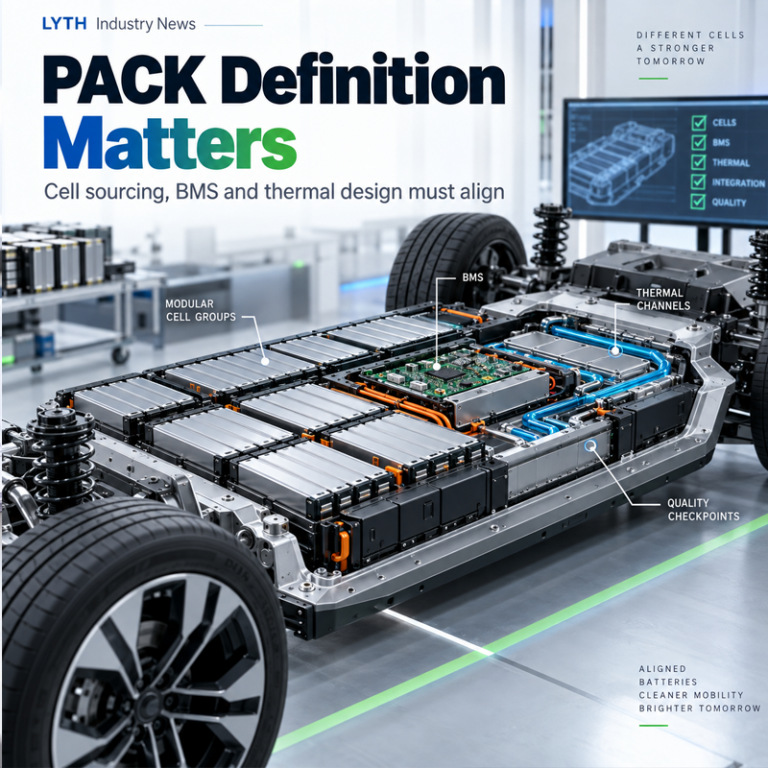 La définition du PACK est importante alors que les constructeurs automobiles séparent l'alimentation en cellules du contrôle du système de batterie