Die Batteriekonformität verlagert sich von den endgültigen Zertifizierungsunterlagen auf das Produktdesign, Lieferantenauswahl, und Fertigungsdatenmanagement. Das Leitliniendokument der Europäischen Kommission, Version 1.0 vom Juli 28, 2026, legt die Datenpunkte des Digital Battery Passport nach Kategorie für Batterien von Elektrofahrzeugen fest, Batterien für leichte Transportmittel, und Industriebatterien.
Das Dokument ersetzt nicht die Batterieverordnung selbst, Aber es gibt der Batterie-Wertschöpfungskette einen klareren Überblick über die Informationen, die Wirtschaftsakteure möglicherweise sammeln und strukturieren müssen. Die aufgelisteten Datenpunkte enthalten eindeutige Kennungen, Herstellerangaben, Batteriekategorie, Modellidentifikation, Produktionsstandort, Herstellungsdatum, Gewicht, Kapazität, Chemie, Gefahrstoffe, Spannungsparameter, Leistungsfähigkeit, erwartete Lebensdauer, Konformitätsinformationen, Informationen zum Abbau, und gegebenenfalls ausgewählte Gesundheitszustands- oder Leistungsdaten.
Für Modul und PACK Käufer, Dies ist wichtig, da Compliance-Nachweise nicht am Ende eines Projekts erstellt werden. Es hängt davon ab, ob der Lieferant genaue Aufzeichnungen von der Zellauswahl über die Modulmontage bis zur Packungsintegration führen kann. Ein Käufer, der einen Verkauf nach Europa plant, benötigt möglicherweise eine Rückverfolgbarkeit des Batteriemodells, Charge, Chemie, Kapazität, Spannungsbereich, Komponentenstruktur, Informationen zur Demontage, und Leistungsmerkmale.
Der Leitfaden macht auch deutlich, dass die Dokumentation mit der technischen Realität verknüpft ist. Einige Hersteller werden diese Batteriezellen auch direkt mit Aluminiumblöcken produzieren, Informationen zur Demontage hängen von der physischen Packungsstruktur ab, Befestigungsmethode, Zellenlayout, Design des Servicezugangs, und Sicherheitswarnungen. Die Leistungsdaten sind abhängig vom gewählten Zellmodell, BMS-Messstrategie, Testverfahren, und wie Betriebsgrenzen definiert werden. Das bedeutet, dass die Batterie-Pass-Bereitschaft nicht nur ein rechtliches oder administratives Thema ist; es ist Teil der Produktarchitektur.
Für internationale Käufer, Der sicherste Ansatz besteht darin, Batterielieferanten frühzeitig in das Projekt einzubeziehen. Bevor Sie ein Modul- oder Paketdesign bestätigen, Käufer sollten den Zielmarkt klären, Batteriekategorie, Nennspannung, Kapazität, Chemie, Anwendung, Betriebsumgebung, Erwartungen an die Gebrauchstauglichkeit, und Dokumentationsbedarf. Dies trägt dazu bei, das Redesign-Risiko zu reduzieren und vermeidet die Entdeckung von Compliance-Datenlücken nach der Werkzeugbereitstellung, Probenahme, oder Versandvorbereitung.
LYTH-Ansicht
Die Bereitschaft zum Batteriepass stärkt den Wert eines disziplinierten Moduls und PACK Maschinenbau. LYTH sollte dieses Thema als Käuferorientierung positionieren: Der richtige Batteriepartner sollte nicht nur die Zellbeschaffung und die Packmontage unterstützen, sondern auch strukturierte Produktinformationen, Bewusstsein für Rückverfolgbarkeit, und praktische Dokumentationskoordination.
Was LYTH kann
LYTH kann Kunden dabei helfen, Batteriemodule und kundenspezifische Anforderungen zu definieren PACK Anforderungen rund um die Anwendung, Spannungsplattform, Kapazität, Zellmodell, BMS-Funktion, mechanisches Layout, Sicherheitskoordination, Versandbedürfnisse, und Vorbereitung der Exportdokumentation. LYTH sollte nicht behaupten, EU-Genehmigungen zu erteilen, kann aber eine sauberere technische Datenerfassung für Kunden-Compliance-Workflows unterstützen.
Quellen
Europäische Kommission: Digital Batteries Passport-Datenpunkte nach Kategorie, Version 1.0, Juli 28, 2026
EUR-Lex: Nachhaltigkeitsregeln für Batterien und Altbatterien


 Die Nachfrage nach Speicherbatterien wird zu einem Problem bei der Zellbeschaffung und PACK-Planung
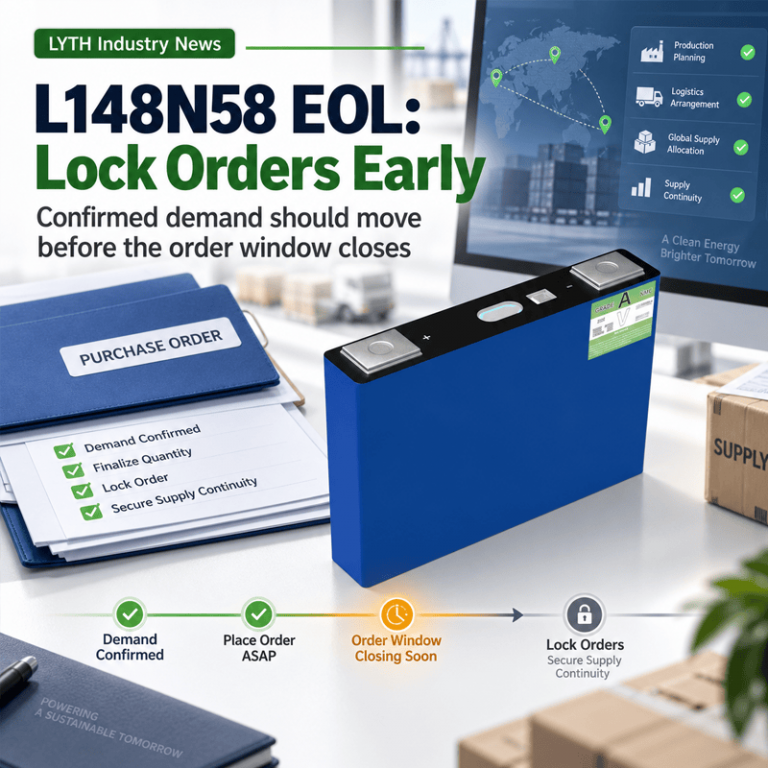 Der EOL-Hinweis für die 58-Ah-Zelle CALB L148N58 weist auf ein Beschaffungsplanungsfenster für Batteriekäufer hin
 Die Bereitschaft zum Batteriepass beginnt mit besseren Upstream-Batteriedaten
 587Ah-Zellen verlagern die Frage von der Kapazität zur Modulbereitschaft
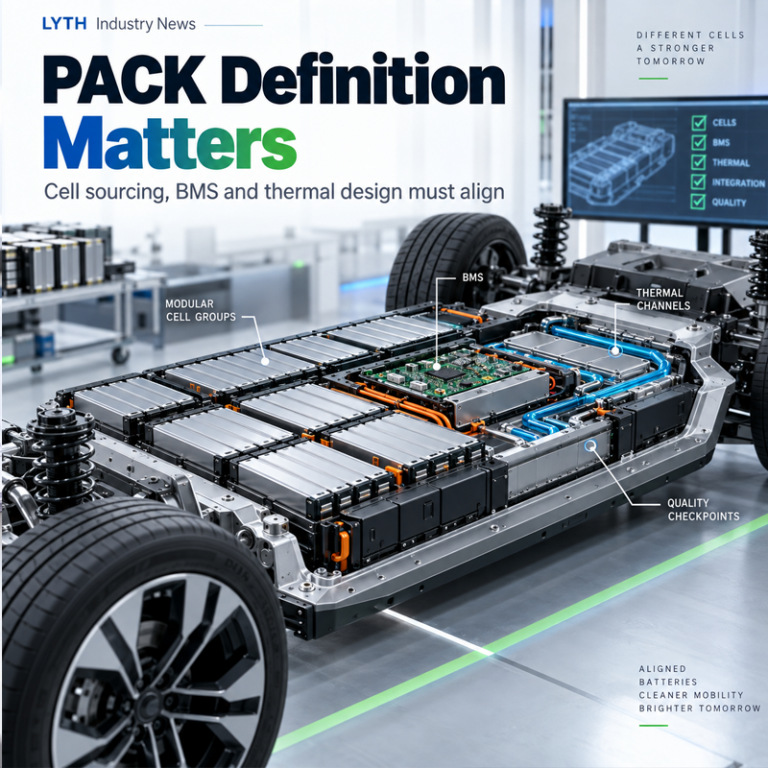 Die PACK-Definition ist wichtig, da Autohersteller die Zellversorgung von der Batteriesystemsteuerung trennen