Chinas aktualisierte Sicherheitsvorschriften für Elektrofahrzeugbatterien traten im Juli in Kraft 1, 2026. Für Batteriemodul- und PACK-Lieferanten, Bei der Änderung handelt es sich nicht nur um regulatorische Neuigkeiten, sondern ein praktisches Designsignal zur Kontrolle der thermischen Ausbreitung, Strukturschutz, und Validierungsworkflow.
Formal English body copy
China’s mandatory standard GB 38031-2025, officially titled Safety requirements for power batteries used in electric vehicles, entered into force on Juli 1, 2026. According to the national standards platform and a Xinhua report published ahead of implementation, the updated rule strengthens expectations around battery safety at both cell and PACK or system level.
A key shift is the tighter treatment of thermal propagation risk. Industry reporting around the rollout noted that the standard raises the bar from warning before fire or explosion to a stricter expectation of no fire and no explosion under the relevant test condition, while still requiring alarm capability. The updated framework also adds bottom-impact testing and safety verification after repeated fast-charging cycles, which matters as higher-rate charging becomes more common.
Für Einkäufer und Ingenieurteams, this is a meaningful market signal. It suggests that battery selection alone is no longer enough; Modulstruktur, insulation strategy, venting path, sensing layout, structural reinforcement, and validation planning all need closer coordination. In der Praxis, projects that once focused mainly on energy density or cost now need stronger evidence on safety architecture and application-fit design.
For companies working on modules and custom PACKs, Die kommerziellen Auswirkungen sind klar: development conversations are moving earlier toward compliance readiness, design margins, and test-oriented engineering decisions. That creates space for technically credible partners who can bridge cell sourcing with practical module and PACK adaptation.
LYTH-Ansicht
Für LYTH, this standard reinforces a simple point: battery safety is increasingly decided at the integration level, not only at the cell level. Buyers will pay more attention to how cells are matched into modules and PACKs, how thermal risk is isolated, and how the final design supports manufacturability and verification.
Was LYTH kann
LYTH can support cell-model matching, module structure discussion, custom PACK design coordination, BMS and sensing adaptation, and early review of thermal/safety design priorities based on the target application. This is especially relevant for EV-related module projects, special-application battery packs, and battery builds that need stronger engineering alignment before sample confirmation.


 Dual-Cluster-Speicherintegration: Hardware-Kostensenkung oder echte elektrische Architektur?
 314Ah, LFP-Zellen sind für die Batteriemodulplanung immer noch wichtig
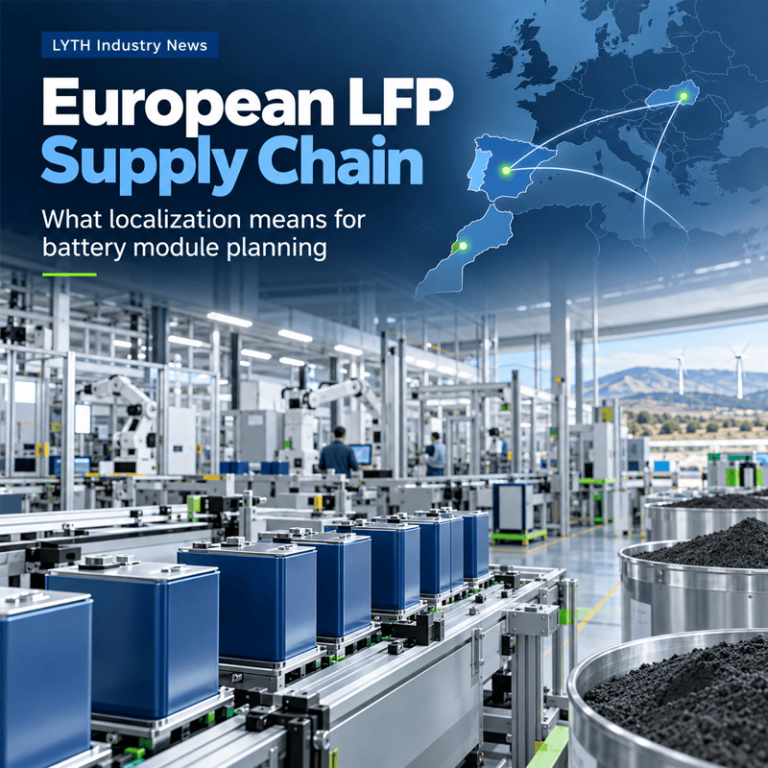 Europäische LFP-Batterielokalisierung und Modulplanung
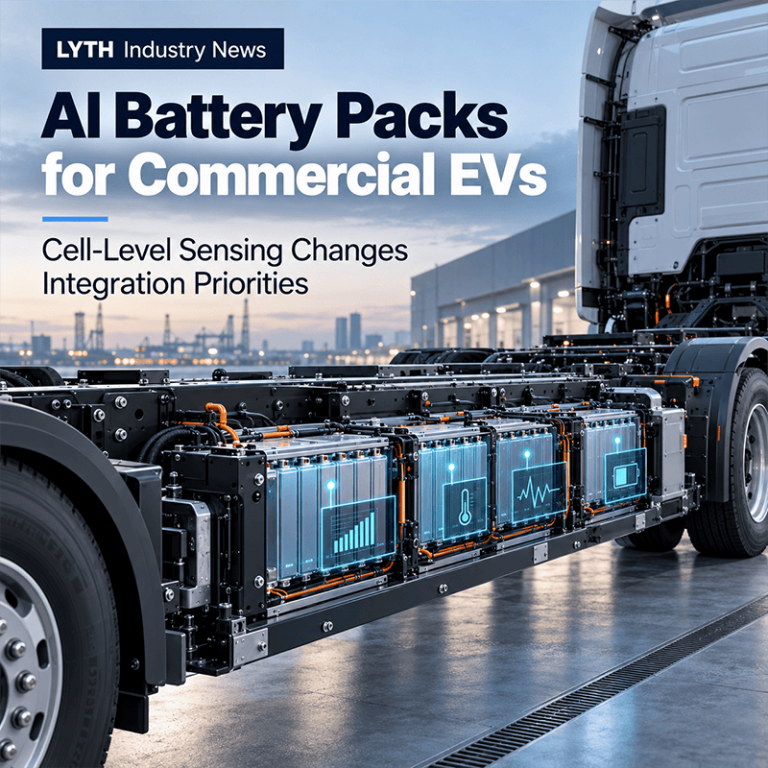 KI-Batteriepakete für kommerzielle Elektrofahrzeuge: Was sich bei der Integration auf Zellebene ändert
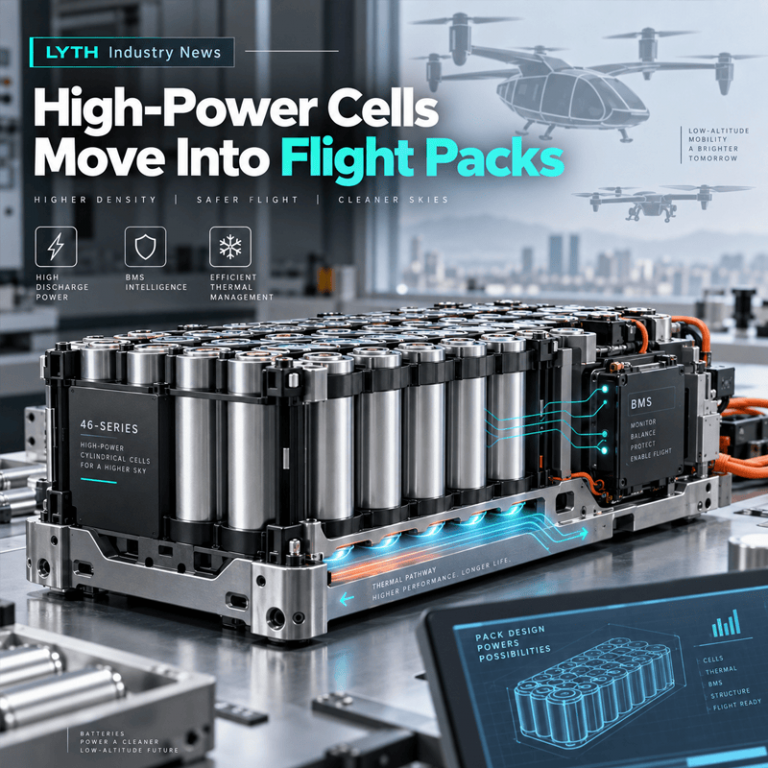 Hochleistungszellen finden Einzug in Flugpakete: Was Batterien in geringer Höhe über die Kapazität hinaus benötigen