Nel mese di agosto 27, 2026, LEAD Intelligent ha annunciato una soluzione integrata per la catena di montaggio per batterie di accumulo di energia di grande formato, affermando che l’adozione di celle da 500Ah+ e addirittura da 1000Ah+ sta rimodellando i requisiti di produzione. Il comunicato evidenzia alcune sfide, tra cui la gestione più pesante delle celle, posizionamento di precisione, consistenza della saldatura, chiusura ermetica, visibilità del processo, e passaggio rapido dai formati da 300Ah+ a 1000Ah+.
La domanda pratica dell’acquirente è semplice: è possibile trasformare una cella più grande in un modulo batteria o PACK affidabile senza creare nuovi rischi di produzione? Una cella di capacità maggiore può ridurre il numero di celle in un sistema, ma aumenta anche la conseguenza di ogni saldatura, foca, tolleranza del dispositivo, e decisione sul controllo termico. Il processo di produzione deve quindi dimostrare coerenza prima che il progetto possa essere considerato commercialmente maturo.
Per gli acquirenti di moduli e PACK, la lezione chiave è che la capacità della cella da sola non definisce la preparazione del progetto. Le celle prismatiche più grandi richiedono una compressione controllata, formazione stabile delle linguette, progettazione della connessione ad alta corrente, finestre di saldatura convalidate, progettazione dell'isolamento, e un’ispezione affidabile di fine linea. Se il design di un PACK cambia da una piattaforma familiare da 280 Ah o 314 Ah a un formato molto più grande, il fornitore deve rivalutare gli impianti, geometria delle sbarre, Punti di campionamento BMS, percorsi termali, robustezza del recinto, e manutenibilità.
Ciò non significa che ogni acquirente dovrebbe spostarsi immediatamente nella cella più grande disponibile. In molti spot pubblicitari leggeri, telecom, mobilità, o applicazioni industriali, un formato di cella o modulo collaudato più piccolo può comunque offrire una migliore flessibilità, certificazione più semplice, rischio di ordine minimo inferiore, e manutenzione più semplice. Le celle di grande formato sono più attraenti quando si trovano sulla linea di produzione, piano di validazione, e il profilo dell'applicazione supportano tutti la modifica.
Per LYTH, l'implicazione commerciale è chiara: il mercato pone sempre più domande sulla producibilità da cella a modulo e da modulo a PACK. LYTH può valutare in modo credibile la selezione del modello cellulare, struttura del modulo, layout PACCHETTO personalizzato, Adattamento del BMS, coordinamento termico/sicurezza, e fattibilità della fase campione. LYTH non dovrebbe presentare celle di grande formato come automaticamente intercambiabili con i progetti PACK esistenti.
Vista LYTH:
Il passaggio a celle più grandi è meglio inteso come un miglioramento della producibilità, non solo un miglioramento della capacità. Un modulo responsabile o una decisione PACK dovrebbe confermare se il formato di cella scelto può essere assemblato, testato, spedito, e supportato nelle reali condizioni operative dell’acquirente.
Cosa può fare LYTH:
LYTH può supportare gli acquirenti con i controlli sull'approvvigionamento delle cellule, valutazione della struttura dei moduli, discussione sulla progettazione del PACK personalizzato, Adattamento del BMS, e coordinamento termico/di sicurezza per progetti di batterie specifiche per l'applicazione. Per le nuove celle di grande formato, la fattibilità dovrebbe rimanere soggetta a dati campione, documentazione del fornitore, e requisiti di convalida.
Fonti:
GUIDA Intelligente / PRNewswire
Riferimento al portafoglio di storage CATL


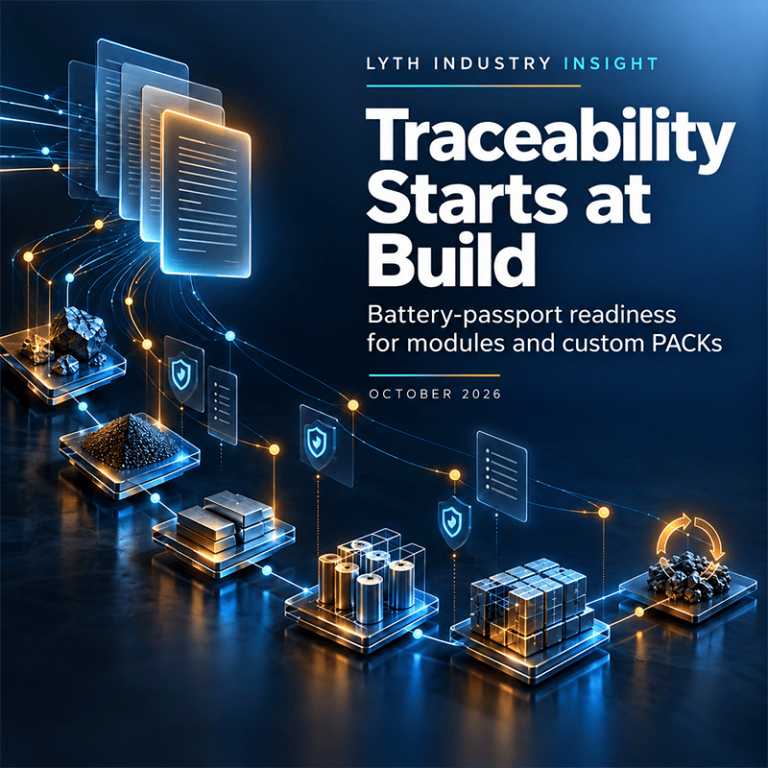 Predisposizione per il passaporto della batteria per moduli e PACK personalizzati
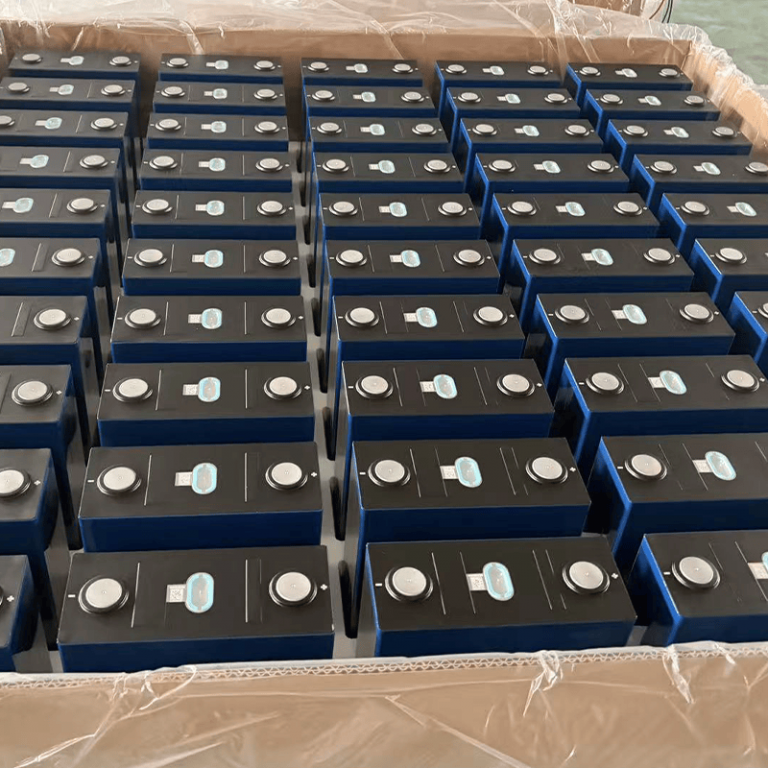 Navi LYTH 16,000 Celle batteria CALB 314Ah per l'Europa
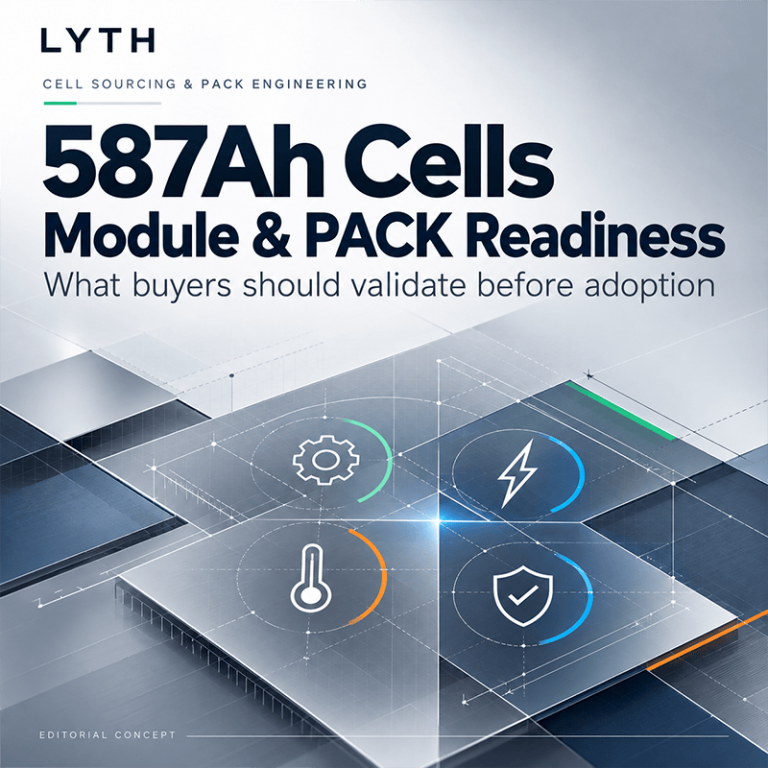 587Mezzi di produzione di massa di celle Ah per gli acquirenti di moduli batteria e PACK
 Integrazione dello storage a doppio cluster: Riduzione dei costi hardware o vera architettura elettrica?
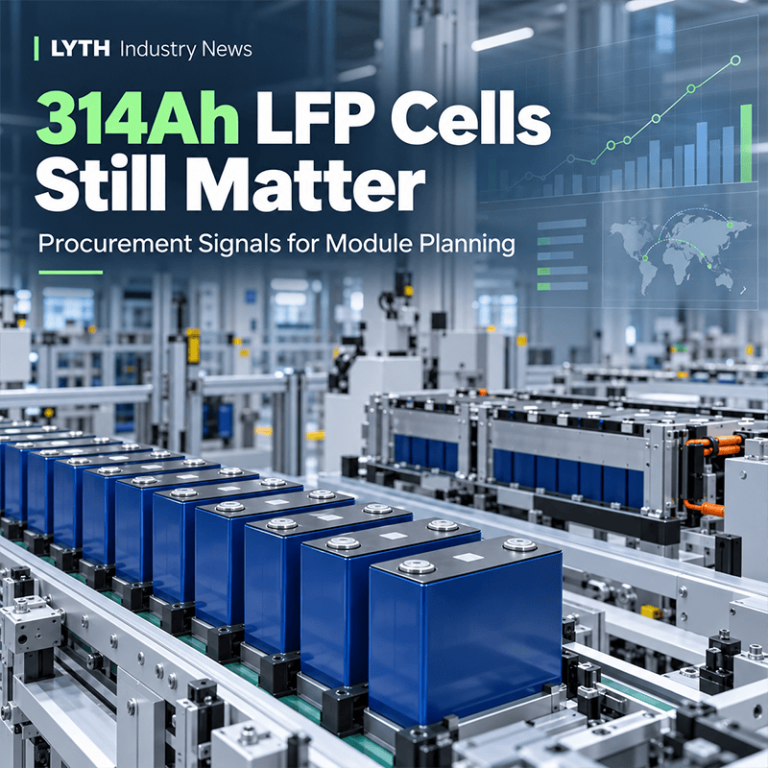 314Le celle Ah LFP sono ancora importanti per la pianificazione dei moduli batteria