Plusieurs développements récents dans le secteur du stockage d’énergie envoient un message plus clair au marché: la concurrence va au-delà des seules cellules de batterie et s'oriente vers l'intégration de systèmes, exécution du projet, et capacité de livraison spécifique à l'application.
En juin 17, FlexGen a annoncé le lancement de ses opérations internationales, apportant son logiciel de gestion de l'énergie, SCADA au niveau du site, commandes de centrale électrique, outils d'analyse, and lifecycle services into the European market. According to the company, this expansion is not limited to software deployment. It also reflects a broader push into project support, intégration, and long-term operational services.
For the industry, this is an important signal. European storage customers are increasingly evaluating full system capability rather than individual hardware components in isolation. Project owners want systems that are easier to commission, more transparent to operate, and better supported over time. This raises the importance of battery modules and PACK solutions that can integrate smoothly into larger storage architectures.
En juin 15, Wärtsilä announced that it will establish a joint venture for its global energy storage business with Germany-based RCT Solutions GmbH. The move brings together Wärtsilä’s storage business with RCT’s experience in solar and storage engineering, manufacturing, and supply chain execution.
This development suggests that the storage market is becoming more specialized and execution-focused. As projects scale, customers are looking for partners with stronger engineering coordination, more stable delivery structures, and better system-level alignment. In this environment, the ability to provide reliable module platforms, intégration PACK personnalisée, and project-ready system support becomes more commercially valuable.
A third recent development came on June 9, when GM shared new details about its work with Peak Energy on sodium-ion batteries for grid-scale storage. In its public statement, GM emphasized that stationary storage customers care deeply about long-term reliability, lower maintenance complexity, and lower total system cost.
That shift matters. It shows that storage technology decisions are becoming more application-driven. Rather than applying one battery logic across all use cases, the market is moving toward chemistry and system choices based on real project needs. For suppliers, this increases the value of system design capability, thermal integration, structural packaging, and project-specific engineering support.
Why It Matters for LYTH
Pour LYTH, these recent developments are commercially meaningful because they align closely with the company’s core business direction.
Première, customers are increasingly buying storage capability at the system level, not simply comparing battery cell pricing. That favors suppliers that can support Battery Module, Custom PACK, et ESS solution requirements together.
Deuxième, as system control, intégration, and delivery become more important, LYTH’s positioning as a manufacturer-oriented and engineering-supported battery solution provider becomes more relevant. The stronger the market focus on project readiness, the more valuable integration capability becomes.
Troisième, growing chemistry diversification in stationary storage increases the importance of flexible solution design. Long-term competitiveness will depend not only on cell access, but on the ability to adapt modules, PACK structures, and system configurations to specific project requirements.
Pour LYTH, the direction of the market is clear: companies that can combine manufacturing, intégration, and application support will be better positioned to capture higher-value ESS and custom battery opportunities.


 Intégration du stockage à double cluster: Réduction des coûts matériels ou véritable architecture électrique?
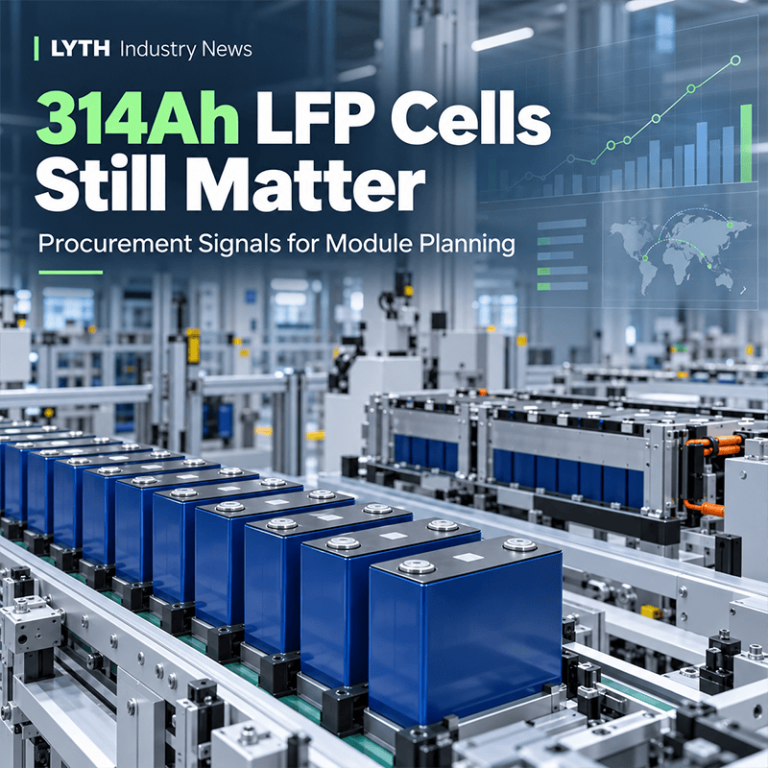 314Les cellules Ah LFP sont toujours importantes pour la planification des modules de batterie
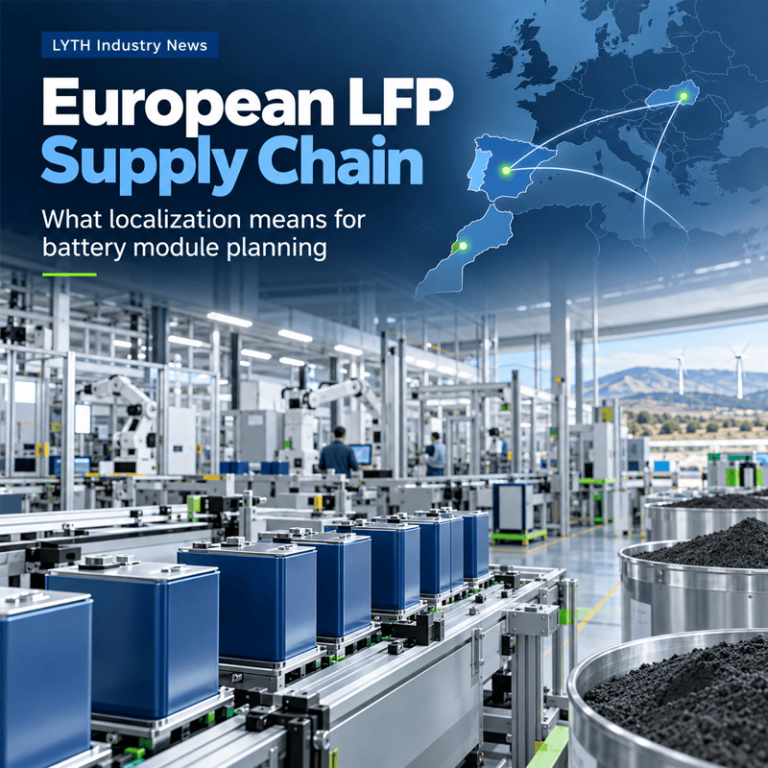 Localisation européenne des batteries LFP et planification des modules
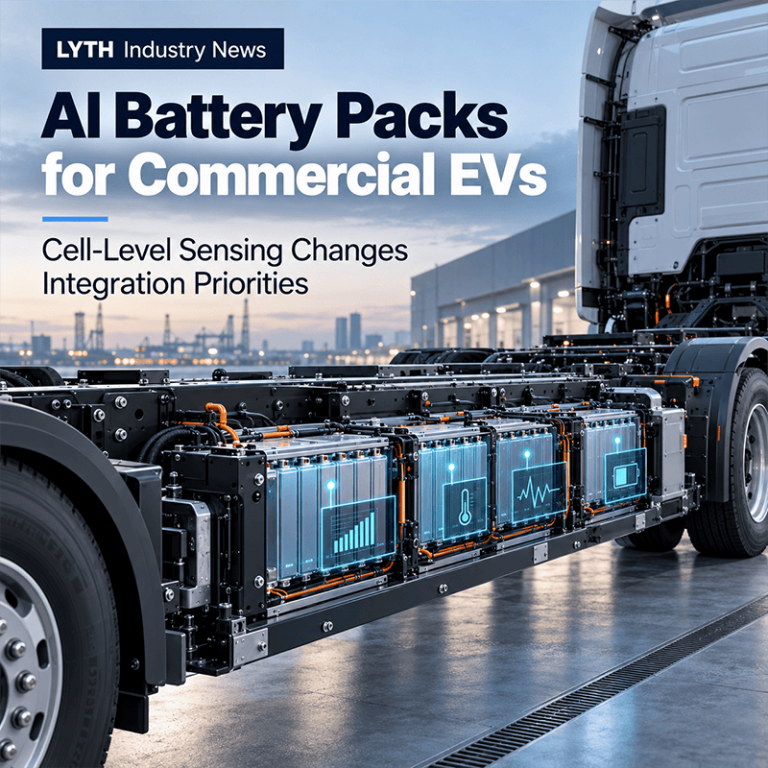 Packs de batteries AI pour véhicules électriques commerciaux: Quels changements la détection au niveau cellulaire pour l’intégration
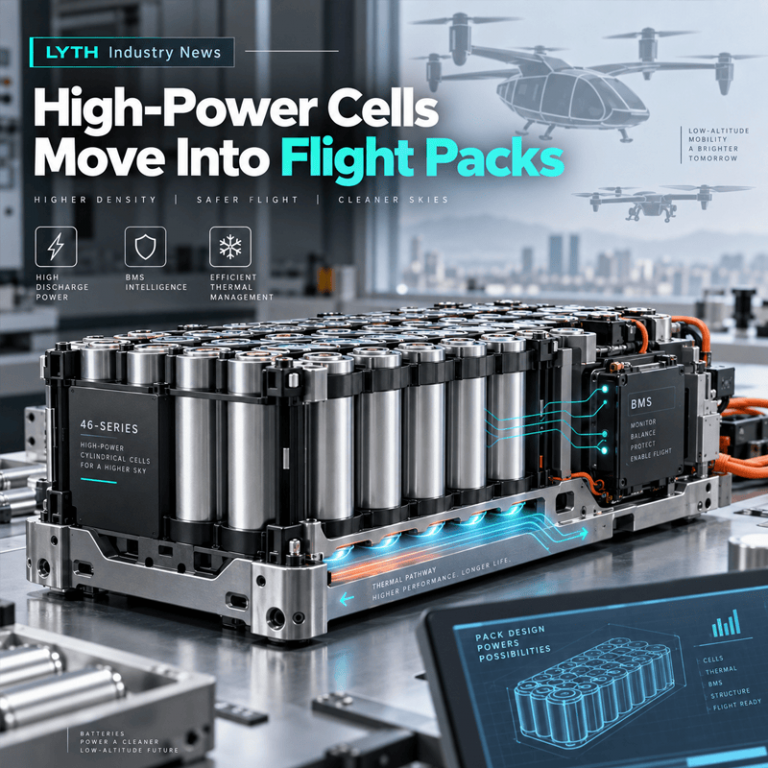 Les cellules haute puissance sont intégrées aux packs de vol: Ce dont les batteries à basse altitude ont besoin au-delà de leur capacité