On August 26, 2026, Hyundai Motor Company announced that it had developed in-house battery cells delivering more than double the output of its previous high-nickel cells with 40% faster charging. The same roadmap also introduced Thermal Runaway Protection, a safety technology intended to block heat transfer to adjacent cells, and a cloud-based BMS strategy designed to detect cell abnormalities in real time.
For battery-module and custom PACK manufacturers, the important signal is not simply that one automaker is improving battery performance. The deeper signal is that safety requirements are becoming more integrated. A battery pack is now expected to coordinate cell chemistry, physical barriers, thermal dissipation, BMS monitoring, and software-driven response. If one of those layers is weak, the rest of the pack may still face risk.
Thermal runaway is a cell-level event that can become a pack-level failure when heat spreads from one cell to nearby cells. Hyundai says its TRP approach combines heat-dissipating pack design with barrier structures between cells. This reinforces a design principle that applies far beyond one vehicle brand: a module or PACK should be evaluated for how it behaves after an abnormal cell event, not only during normal charging and discharge.
The BMS layer is equally important. Real-time abnormality detection can help identify early warning signs before a fault develops into a service or safety issue. However, cloud-based BMS claims should be read carefully. Buyers should confirm what is handled locally by the BMS, what is analyzed remotely, what data is available to the operator, and how alerts translate into charge limitation, balancing, maintenance, or shutdown behavior.
For custom PACK projects, this creates a more disciplined engineering checklist. The buyer should confirm cell format, series-parallel layout, insulation, busbar protection, temperature sensor placement, balancing method, enclosure venting, thermal interface materials, and test records. Fast charging, high power output, and compact pack structure all increase the need for tighter thermal and electrical coordination.
LYTH View:
The industry direction is clear: battery pack safety is no longer a single component decision. A credible PACK design must show how the cell, BMS, mechanical structure, thermal path, and validation workflow work together. LYTH should treat Hyundai’s announcement as a useful engineering reference point, while avoiding any claim that the same technology is available in LYTH products unless validated project by project.
What LYTH Can Do:
LYTH can support battery module and custom PACK projects through cell model confirmation, module layout review, BMS adaptation discussion, thermal/safety coordination, and application-matching checks. For EV module, mobility, telecom, and light-storage projects, LYTH can help buyers define practical validation requirements before production.
Sources: Hyundai Motor official announcement, EV Central coverage


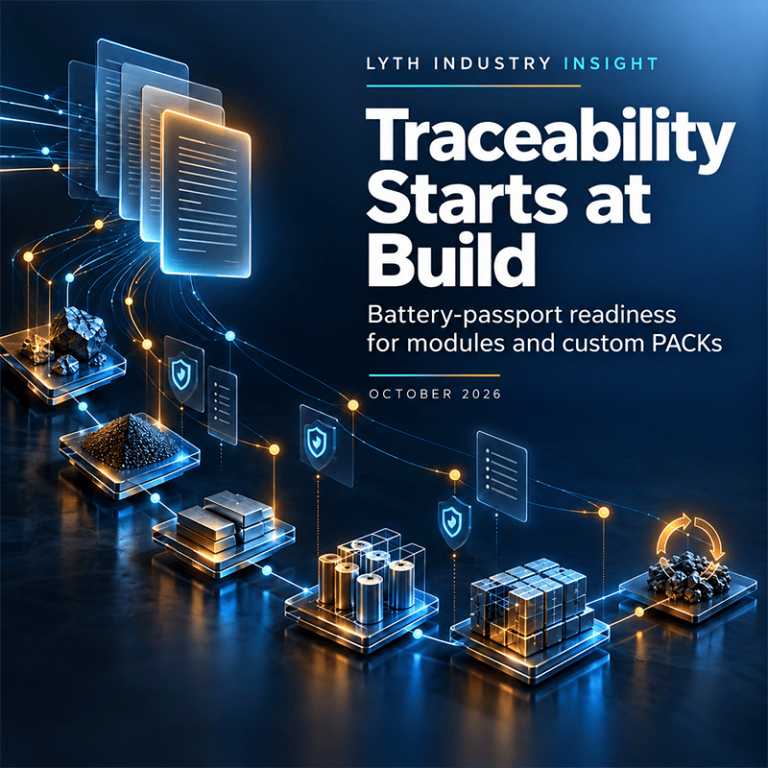 Battery Passport Readiness for Modules and Custom PACKs
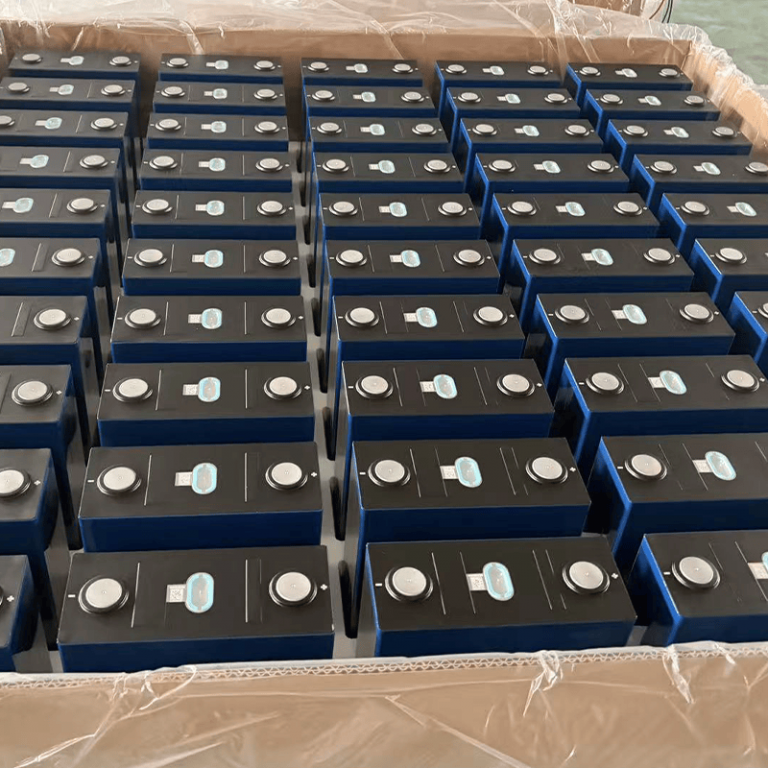 LYTH Ships 16,000 CALB 314Ah Battery Cells to Europe
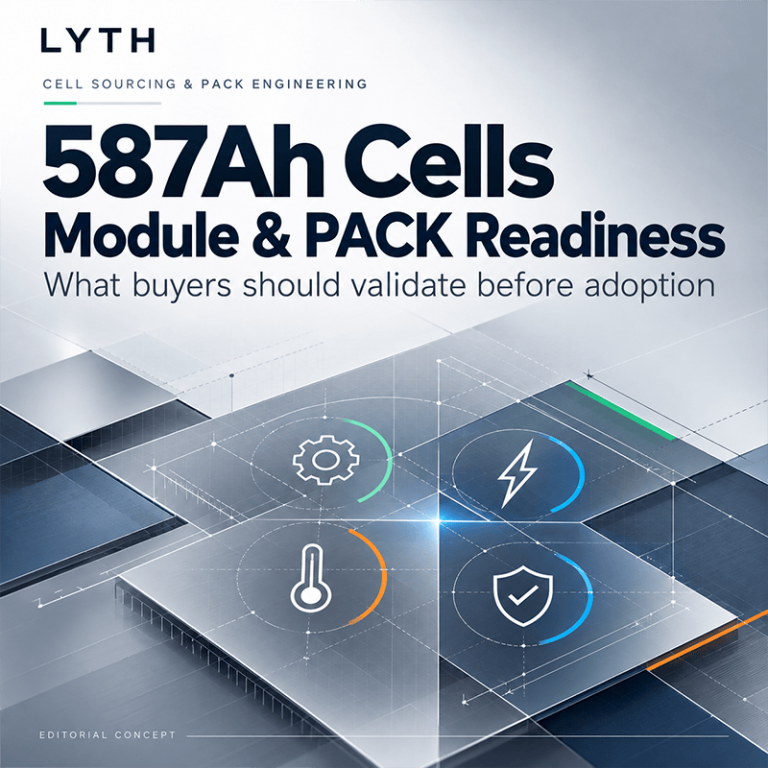 587Ah Cell Mass Production Means for Battery Module and PACK Buyers
 Dual-Cluster Storage Integration: Hardware Cost-Cutting or Real Electrical Architecture?
 314Ah LFP Cells Still Matter for Battery Module Planning