On September 20, 2026, REPT BATTERO published an official update from IAA Transportation 2026 in Hannover, where it presented a commercial-vehicle battery portfolio covering multiple use cases, including chassis D Pro, Chenxing S-series, F-box, C-box, and G-box configurations. The company described battery systems ranging from 140kWh to 568kWh for flexible vehicle combinations, and 600-800kWh battery systems for long-range chassis applications.
The important industry signal is not only the energy number. Commercial vehicle electrification is moving toward battery platform logic. Instead of treating every truck, bus, special vehicle, or construction machine as a fully separate battery project, suppliers are organizing products into repeatable battery-box families that can be configured by vehicle size, route length, load condition, charging strategy, and regional operating environment.
For battery buyers, this changes the evaluation process. A commercial EV battery pack must be checked against chassis envelope, mounting direction, high-voltage architecture, service access, vibration profile, communication protocol, charging power, and thermal behavior. A larger nominal capacity does not automatically create a better project result if the pack cannot fit the vehicle layout or if the BMS, cooling, and mechanical interface require heavy redesign.
This is especially relevant for battery module and custom PACK partners. A configurable pack platform still needs engineering adaptation before it becomes a reliable application battery. Cell selection, module grouping, busbar design, insulation clearance, temperature sensing, enclosure strength, and end-of-line testing all affect whether the pack can move from specification sheet to production-ready assembly.
The European commercial-vehicle context also raises compliance and service questions. REPT’s update mentioned European localization, battery passport, supply-chain due diligence, and carbon management. For buyers exporting or operating in Europe, battery documentation is becoming part of the product decision. A pack partner must be able to support traceability, technical files, shipping preparation, and application-specific validation records.
For LYTH’s audience, the practical lesson is clear: commercial EV battery projects should start with the vehicle application, not only the cell brand or capacity. Module format, electrical interface, cooling approach, communication requirement, and manufacturability should be defined early, because these decisions determine cost, lead time, reliability, and future serviceability.
LYTH View:
This development supports a more disciplined way to discuss EV battery modules and custom PACKs. Platform-based battery-box families can reduce engineering repetition, but they still require careful adaptation for each vehicle and duty cycle. LYTH should treat modularity as an engineering starting point, not as proof of universal interchangeability.
What LYTH Can Do:
LYTH can support customers with battery cell sourcing checks, EV battery module configuration, custom PACK structure review, BMS adaptation, and application matching for commercial-vehicle and industrial-equipment battery projects, subject to project-specific validation.
Sources:
REPT BATTERO official IAA Transportation 2026 update
Main Cover Image Copy:


 Localized Battery PACK Manufacturing: What the CATL-BME Agreement Signals for Buyers
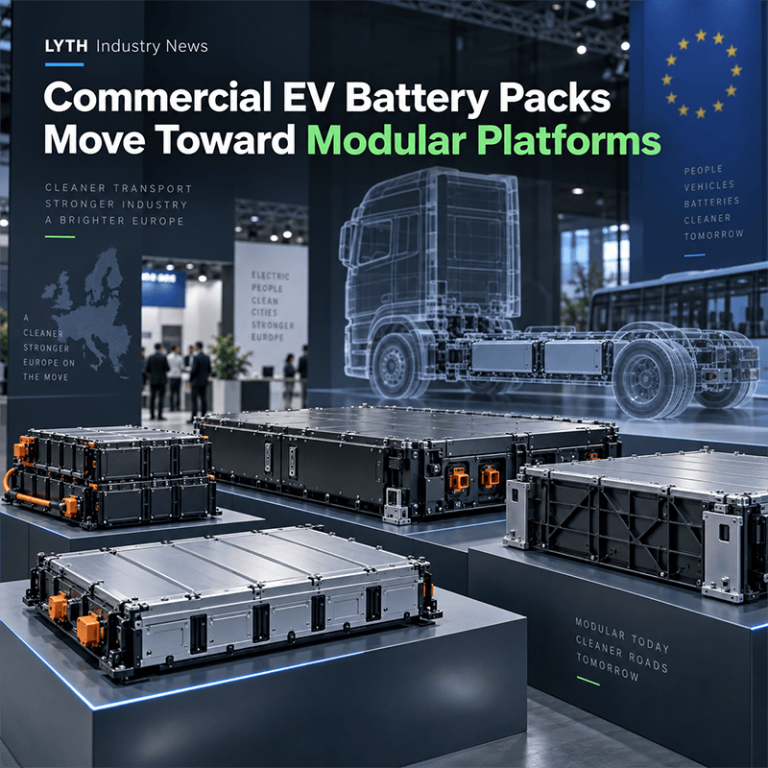 Commercial EV Battery Packs Move Toward Modular Platforms
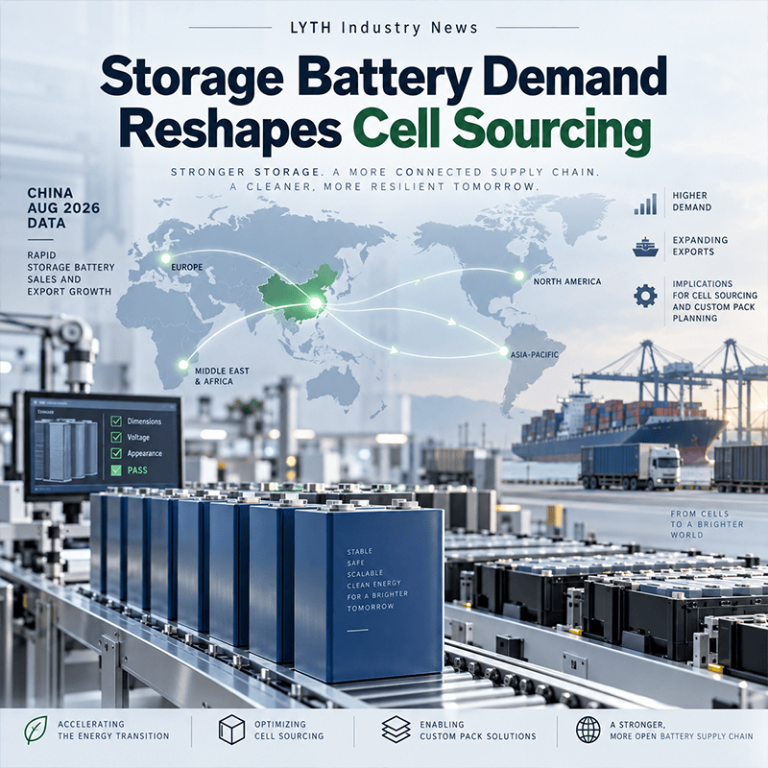 Storage Battery Demand Is Becoming a Cell-Sourcing and PACK Planning Issue
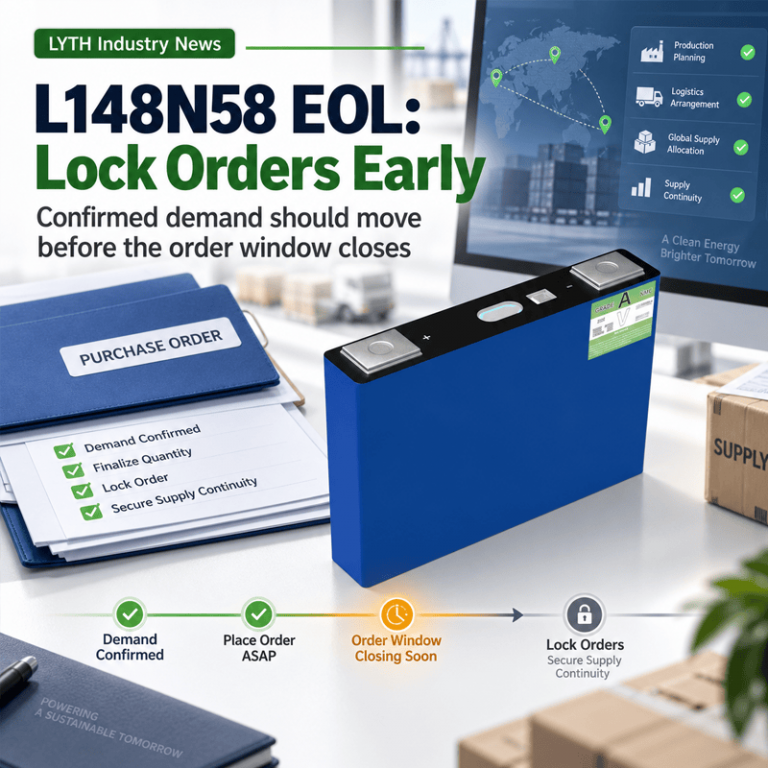 CALB L148N58 58Ah Cell EOL Notice Signals a Sourcing Planning Window for Battery Buyers
 Battery Passport Readiness Starts With Better Upstream Battery Data