Im August 6, 2026, OFweek berichtete, dass BAK Battery eine prismatische 85-Ah-LFP-Zelle für AIDC-Energiespeicheranwendungen auf den Markt gebracht hat. In dem Bericht wurde beschrieben, dass die Zelle für eine schnelle Entladung ausgelegt sei, geringer Innenwiderstand, schnelle Impulsantwort, und Sicherheitszertifizierungsabdeckung, einschließlich UL9540A und UL1973. Es hieß auch, dass das Produkt in die Massenproduktion gegangen sei.
Direkte Antwort: Eine AIDC-orientierte Hochgeschwindigkeitszelle ändert das PACK-Design, da die Batterie einen plötzlichen Strombedarf decken muss, nicht nur lange Sicherungsdauer. Zellimpedanz, Wärmeerzeugung, BMS-Abtastgeschwindigkeit, Kontaktwiderstand, Schutzlogik, und Gehäuseluftstrom oder -kühlung werden alle Teil der Anwendungsanpassung.
Dies ist wichtig, da KI-Rechenzentren und hochdichte Rechenlasten schnellere und stärkere Stromschwankungen verursachen können als herkömmliche Standby-Anwendungen. Eine in diesem Zusammenhang verwendete Pufferbatterie muss möglicherweise eine starke Impulsleistung liefern, Halten Sie die Spannung stabil, und vermeiden Sie einen übermäßigen Wärmeanstieg bei wiederholten Hochstromereignissen. Wenn der PACK nur auf die Nennspannung und -kapazität ausgelegt ist, Das Ergebnis sieht auf dem Papier vielleicht akzeptabel aus, entspricht aber nicht dem tatsächlichen Betriebsprofil.
Für kundenspezifisches PACK-Engineering, Die erste Designebene ist die Zelle selbst. Eine LFP-Zelle mit hoher Rate kann eine stärkere Entladeleistung unterstützen, Der endgültige Akku hängt jedoch davon ab, wie die Zelle angeschlossen ist, abgekühlt, überwacht, und geschützt. Dimensionierung der Sammelschienen, Schweißqualität, Kontaktwiderstand, Sicherungsstrategie, Stromsensorbereich, Platzierung des Temperatursensors, und BMS-Firmware-Einstellungen können sich alle darauf auswirken, ob das PACK die Nennleistung der Zelle sicher nutzen kann.
Die zweite Schicht ist die thermische Koordination. Hoher Strom erzeugt Wärme durch Innenwiderstand und Verbindungswiderstand. Auch wenn der Zelllieferant einen kontrollierten Temperaturanstieg unter definierten Testbedingungen meldet, Ein echtes PACK muss das Gehäusevolumen berücksichtigen, Belüftung, Installationsausrichtung, umliegender Ausrüstung, Umgebungstemperatur, und Arbeitszyklus. Für Telekommunikationsschränke, UPS-Räume, und kleine kommerzielle Backup-Systeme, Diese praktischen Bedingungen können wichtiger sein als die Gesamtentlassungsrate.
Die dritte Ebene ist Kommunikation und Schutz. AIDC, Telekommunikation, und Notstromsysteme erfordern oft klare Statusberichte, Fehleranalyse, und vorhersehbares Abschaltverhalten. Das BMS muss die Leistungsfähigkeit auf Zellebene in Zuverlässigkeit auf Systemebene umwandeln, indem es Stromgrenzwerte festlegt, Temperaturschwellenwerte, SOC-Fenster, Ausgleichsstrategie, Alarm, und Kommunikationsprotokolle, die zur Host-Ausrüstung passen.
Für Käufer, Die praktische Lektion ist einfach: Geben Sie ein Hochgeschwindigkeits-Backup-PACK nicht nur nach Kapazität an. Fragen Sie nach dem vorgesehenen Entladungsprofil, Spitzenstromdauer, Kühlmethode, BMS-Protokoll, Zertifizierungsgrenze, Installationstemperaturbereich, und Validierungstestplan. Ausgangspunkt ist das Zellmodell; Das PACK-Design entscheidet darüber, ob die Zelle verantwortungsvoll genutzt werden kann.
LYTH-Ansicht
Der AIDC-Batterietrend ist für LYTH nützlich, da er direkt mit der kundenspezifischen PACK-Technik verbunden ist und nicht mit der Lieferung von Kraftwerken im Versorgungsmaßstab. LYTH sollte Hochleistungszellen als technisches Bewertungsthema behandeln: Die Chance ist real, Aber jedes Projekt benötigt weiterhin Zelldaten, BMS-Anpassung, thermische Überprüfung, und anwendungsspezifische Validierung vor der kommerziellen Positionierung.
Was LYTH kann
LYTH kann Käufer beim Vergleich von Zellmodellen unterstützen, Modul- oder PACK-Strukturbewertung, BMS-Anpassung, und Wärme-/Sicherheitskoordination für Telekommunikations-Backup, UPS, Industrieausrüstung, und leichte kommerzielle Speicheranwendungen. Für hochpreisige Projekte, LYTH sollte den Arbeitszyklus bestätigen, Kommunikationsanforderungen, Gehäusebeschränkungen, und Zielzertifizierungen vor dem endgültigen Angebot.
Quellen
OFweek: AIDC tritt in die Ära der Leistungsreaktion im Millisekundenbereich ein,Die BAK 85Ah-Hochleistungsbatteriezelle wurde als Reaktion auf die Nachfrage entwickelt
UL-Lösungen: Prüfung und Zertifizierung von Energiespeichersystemen


 Dual-Cluster-Speicherintegration: Hardware-Kostensenkung oder echte elektrische Architektur?
 314Ah, LFP-Zellen sind für die Batteriemodulplanung immer noch wichtig
 Europäische LFP-Batterielokalisierung und Modulplanung
 KI-Batteriepakete für kommerzielle Elektrofahrzeuge: Was sich bei der Integration auf Zellebene ändert
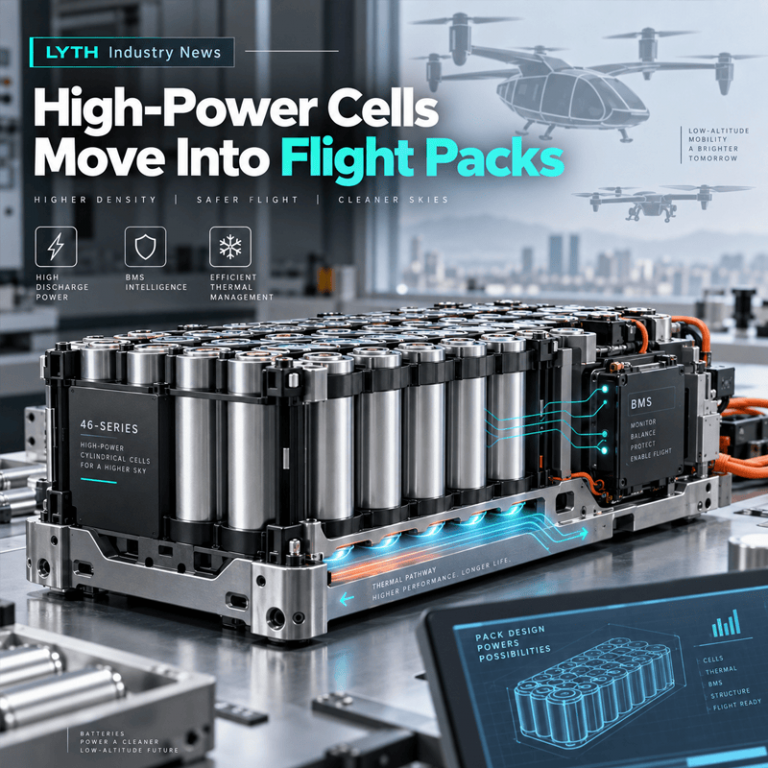 Hochleistungszellen finden Einzug in Flugpakete: Was Batterien in geringer Höhe über die Kapazität hinaus benötigen