en agosto 6, 2026, CnEVPost informó que CALB estaba llevando a cabo una revisión de calidad y seguridad después de problemas generalizados con las celdas de batería en los vehículos GAC Aion.. Battery-News resumió el mismo desarrollo en agosto 7. Los informes relacionaron el problema con las celdas LFP de 177 Ah utilizadas en los vehículos Aion S., con quejas que incluyen hinchazón, fuga de electrolito, y pérdida repentina de energía después de una operación de alto kilometraje.
El punto comercialmente importante no es sólo que un proveedor enfrentó una controversia de calidad. Es que se recuerda a los compradores de baterías cuánto depende la confiabilidad final del PACK de la disciplina de fabricación a nivel de celda.. Tolerancia del recubrimiento del electrodo, control de humedad durante el llenado de electrolitos, trazabilidad de muestras retenidas, márgenes de soldadura, diseño de carcasa, y la revisión de datos de BMS afectan lo que sucede después de que un módulo o PACK ha pasado años en servicio real..
Para proyectos de PAQUETES de baterías personalizados, la lección es practica: el nombre del modelo de celda y la clasificación de capacidad no son suficientes. Los compradores deben preguntar cómo se examinan las células antes del montaje., cómo se identifican los lotes, cómo se verifica la consistencia del voltaje y la resistencia interna, y cómo se pueden rastrear los datos anormales hasta los lotes de producción. Estas comprobaciones son especialmente importantes cuando un PACK está diseñado para taxis., vehículos comerciales ligeros, respaldo de telecomunicaciones, almacenamiento móvil, u otras aplicaciones con alto ciclo, vibración, exposición al calor, o servicio de espera continuo.
La respuesta de CALB también destaca el papel del control organizacional.. Según CnEVPost, El departamento de calidad de CALB recibió mayor autoridad sobre la liberación de lotes, mientras que se crearon equipos de calidad del cliente para revisar los datos de BMS con los fabricantes de vehículos.. Para fabricantes de módulos y PACKS, Esto refuerza un principio simple.: La velocidad de producción no debe anular los criterios de liberación de calidad cuando la seguridad, exposición a la garantía, y el tiempo de inactividad del cliente está en juego.
Ver:
Para LYTH, Este desarrollo apoya una conversación más dirigida por la ingeniería con los compradores.. La pregunta correcta no es "¿qué celular es más barato?"?" sino "¿qué lote de células, estructura del módulo, Lógica BMS, plan termico, y el proceso de inspección se ajusta a la aplicación?“Un programa PACK estable debería definir puertas de calidad antes del montaje en masa, no después de que aparezcan quejas de campo.
Qué puede hacer LYTH:
LYTH puede respaldar las comprobaciones de abastecimiento de celdas de batería, desarrollo del módulo de batería, integración de PACK personalizado, Adaptación BMS, y coincidencia de aplicaciones para proyectos donde la confiabilidad y la trazabilidad son importantes. Para aplicaciones de alto rendimiento, LYTH puede ayudar a los compradores a aclarar los requisitos del modelo celular, configuración del módulo, lógica de protección, y puntos de inspección de fabricación antes de la producción.
Fuentes: CnEVPost, agosto 6, 2026; Batería-Noticias, agosto 7, 2026


 Integración de almacenamiento de clúster dual: Reducción de costes de hardware o arquitectura eléctrica real?
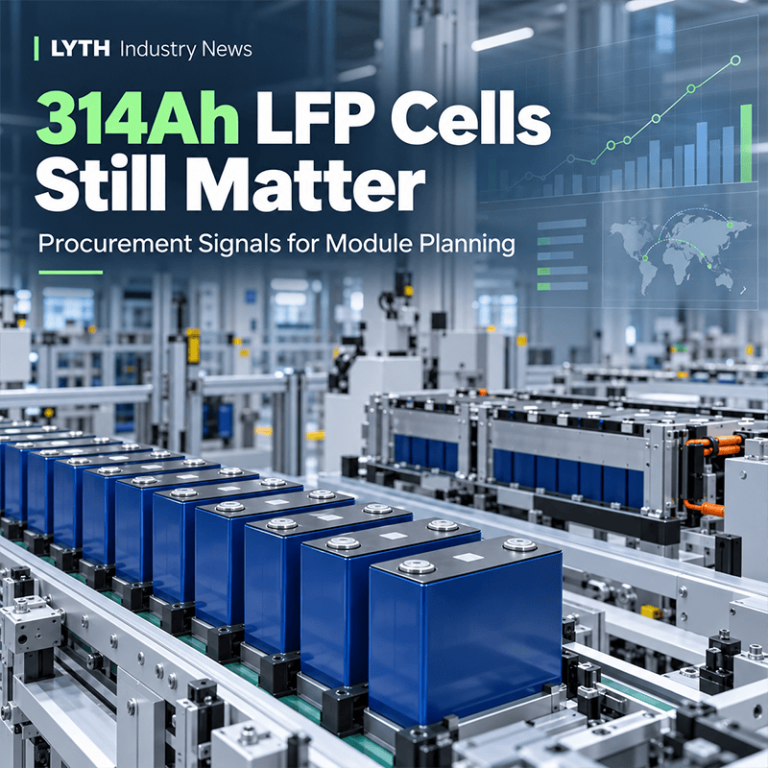 314Las celdas Ah LFP siguen siendo importantes para la planificación de módulos de batería
 Localización de baterías LFP europeas y planificación de módulos
 Paquetes de baterías de IA para vehículos eléctricos comerciales: Qué cambia la detección a nivel celular para la integración
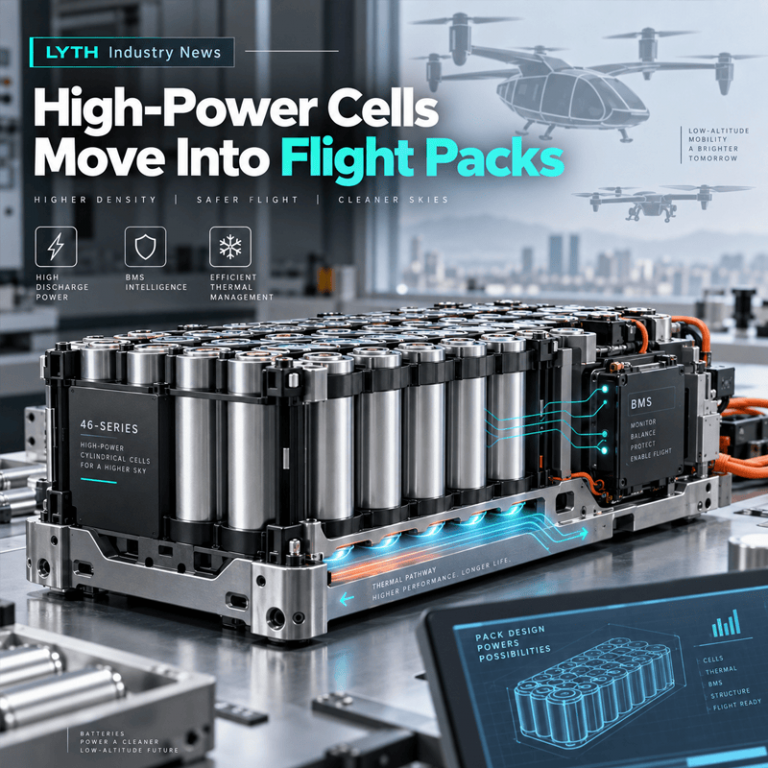 Las células de alta potencia se trasladan a paquetes de vuelo: Lo que requieren las baterías de baja altitud más allá de la capacidad