En agosto 6, 2026, SVOLT informó que su instalación global de baterías de energía en el primer semestre alcanzó los 15,7 GWh, con un crecimiento interanual por encima del mercado en general. La compañía también hizo referencia a señales recientes de productos y procesos, incluido el progreso de la batería de hoja corta., planificación de tecnología híbrida sólido-líquido, mejoras en el proceso de apilamiento, crecimiento de envíos al exterior, y expansión hacia nuevas aplicaciones.
La lección más útil para los compradores de módulos no es que un formato se ajuste a cada proyecto.. Es que las plataformas de baterías para vehículos eléctricos son cada vez más especializadas. Un módulo seleccionado para un vehículo., modernización, plataforma de movilidad, o proyecto de electrificación industrial aún requiere verificación de ventana de voltaje, diseño del paquete, puntos de montaje, ruta de enfriamiento, diseño de aislamiento, lógica de comunicación, y comportamiento de seguridad.
Un módulo de batería es el puente de ingeniería entre la celda y el PACK terminado. Incluso cuando la química o la capacidad de la celda parecen atractivas, el módulo debe coincidir con el espacio mecánico de la aplicación, perfil de descarga, límites de carga, ruta termal, ambiente de vibración, y estrategia BMS. Esto es especialmente importante para los compradores que comparan formatos como módulos de hoja corta., módulos de celdas prismáticas, Módulos estilo VDA, y diseños de módulos relacionados con MEB.
Para compradores internacionales, La reciente señal SVOLT también muestra que el suministro se está volviendo más global y específico para cada aplicación.. El crecimiento de los envíos al extranjero puede mejorar el acceso a formatos avanzados de células y módulos, pero no elimina la necesidad de realizar pruebas de muestra, confirmación del dibujo, revisión de barra colectora, controles de aislamiento, y validación de final de línea. Un módulo comercialmente atractivo puede seguir siendo inadecuado si el proyecto no puede soportar su refrigeración., fijación, o requisitos de comunicación.
Para los clientes de LYTH, La conclusión práctica es tratar el abastecimiento de módulos como una decisión de ingeniería.. Antes de seleccionar un módulo, Los compradores deben confirmar el voltaje objetivo., capacidad, espacio de instalación, demanda actual, método de control térmico, certificaciones requeridas, condiciones de envío, y la interfaz BMS. Estas comprobaciones reducen el riesgo de rediseño y ayudan a determinar si un módulo existente, un módulo modificado, o una ruta PACK personalizada es más realista.
Ver:
Las nuevas señales de suministro de baterías para vehículos eléctricos respaldan un mayor interés en el diseño de baterías modulares, pero también hacen que la disciplina de compatibilidad sea más importante. LYTH debería discutir los formatos de los módulos mediante la validación., adaptación, y capacidad de fabricación en lugar de presentar cualquier formato como universalmente intercambiable.
Qué puede hacer LYTH:
LYTH puede admitir la selección del módulo de batería de EV, Discusión del módulo relacionado con VDA355 y MEB590, desarrollo de módulos personalizados, comprobaciones de abastecimiento celular, Planificación de integración de PACK, y BMS/coordinación térmica basada en los requisitos del proyecto y las necesidades de validación..
Fuentes:
Oficial SVOLT agosto 6 actualizar
Índice de noticias del sitio web oficial de SVOLT


 Integración de almacenamiento de clúster dual: Reducción de costes de hardware o arquitectura eléctrica real?
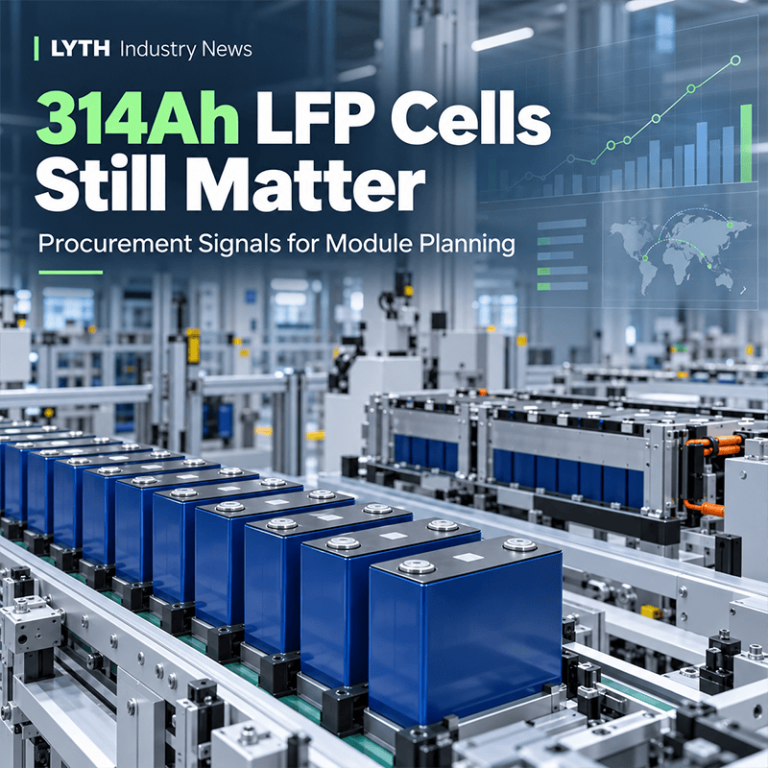 314Las celdas Ah LFP siguen siendo importantes para la planificación de módulos de batería
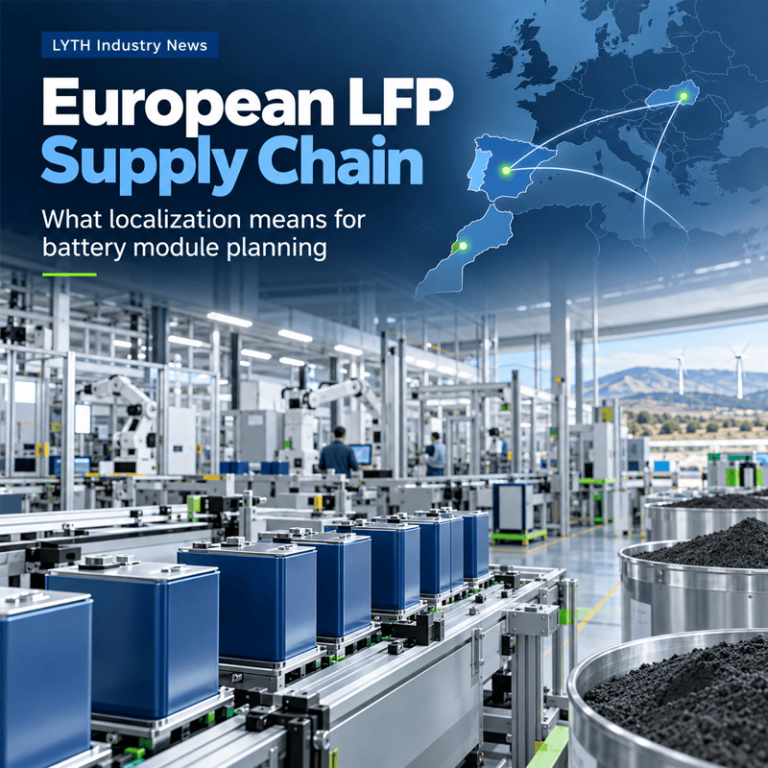 Localización de baterías LFP europeas y planificación de módulos
 Paquetes de baterías de IA para vehículos eléctricos comerciales: Qué cambia la detección a nivel celular para la integración
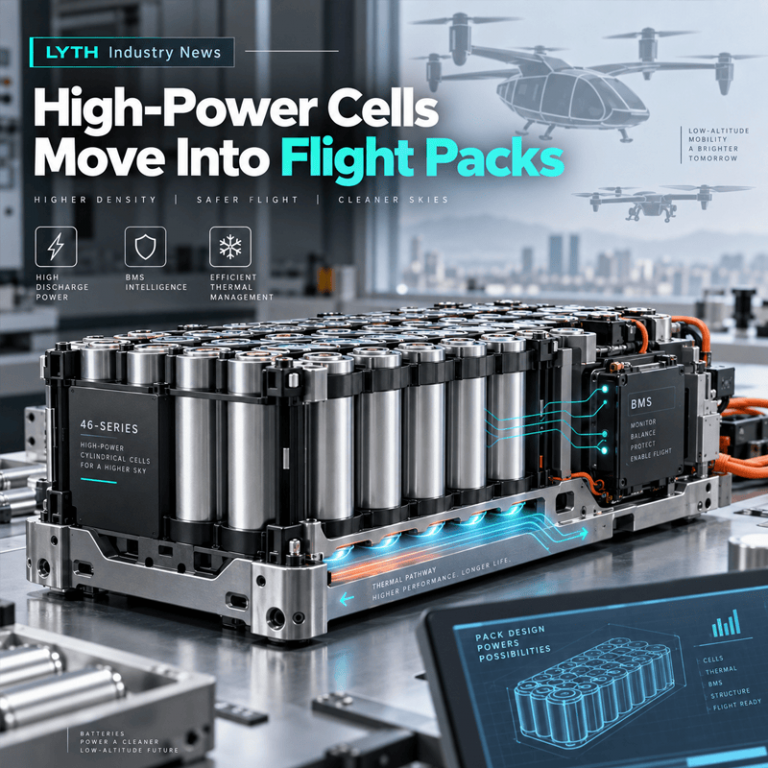 Las células de alta potencia se trasladan a paquetes de vuelo: Lo que requieren las baterías de baja altitud más allá de la capacidad