En août 12, 2026, Pylontech a annoncé que deux normes de groupe pour les batteries de démarrage sodium-ion étaient officiellement entrées en vigueur: T/CIAPS0054-2026, couvrant les exigences techniques de sécurité, et T/CIAPS0055-2026, couvrant les exigences de performance et les méthodes de test. Les normes sont administrées par l'Association industrielle chinoise des sources d'énergie et s'appliquent aux cellules sodium-ion utilisées dans les sources d'énergie de démarrage à haut débit pour motos., automobiles, moteurs à huile, and similar applications.
The practical question for buyers is not simply whether sodium-ion chemistry is “ready.” The better question is whether a specific sodium-ion cell and PACK design has been validated against the starting current, temperature range, charging profile, safety limits, exigences en matière de communication, and mechanical environment of the target application.
Starting batteries are different from ordinary backup batteries. They must deliver short, high-power pulses reliably, often at low temperatures, while tolerating frequent charge-discharge events and harsh vibration or thermal conditions. A cell that performs well in a laboratory cycle test still needs application-level confirmation before it can be used in a PACK for generators, small vehicles, telecom support equipment, or industrial starting systems.
For sodium-ion chemistry, the commercial appeal is clear: material diversification, potential low-temperature advantages, and suitability for applications where extreme energy density is less important than power, cost stability, et comportement en matière de sécurité. toutefois, these advantages are product-specific. A buyer should not assume that every sodium-ion cell will automatically outperform LFP or lead-acid in cold-start conditions, charging acceptance, abuse tolerance, or transport requirements.
The new standards matter because they create a more consistent language for evaluating sodium-ion starting cells. They give engineers and procurement teams a clearer basis for asking suppliers about test methods, high-rate discharge behavior, safety abuse tests, performance retention, étiquetage, emballage, transport, and storage. This is especially important for custom PACK work, where a cell’s individual performance must be coordinated with BMS thresholds, conception de jeu de barres, structure de l'enceinte, chemins de chaleur, cable sizing, fusing, and charger compatibility.
Pour la clientèle de LYTH, the immediate opportunity is not to overclaim sodium-ion readiness. The responsible opportunity is to evaluate sodium-ion as one candidate chemistry for selected small PACK and starting-power applications. In many projects, mature LFP cells may remain the better choice because of established supply, certification records, known BMS behavior, and predictable export documentation. In other projects, sodium-ion may become worth testing where low-temperature operation, high-rate pulse performance, or material diversification is a priority.
Buyers should therefore begin with the application profile. Required starting current, pulse duration, minimum ambient temperature, charge source, duty cycle, enclosure size, exposition aux vibrations, interface de communication, certification route, and shipping destination should be confirmed before cell selection. Only after that should the supplier compare sodium-ion, LFP, and other chemistry options.
Voir LYTH
The sodium-ion starting-battery standards are a signal that the market is becoming more engineering-driven. For small PACK buyers, the key step is to move from chemistry interest to validation discipline: cell data, BMS settings, comportement thermique, safety testing, and real application requirements must be checked together.
Ce que LYTH peut faire
LYTH can support project-level chemistry comparison, battery cell sourcing checks, Discussion sur la conception d'un PACK personnalisé, Adaptation GTB, coordination thermique et sécurité, and sample-stage feasibility review for small PACK and backup-power applications, subject to validated cell data and customer requirements.
Sources
Pylontech official news index
CIAPS group standards announcement
Pylontech sodium-ion standards report via Solarbe
Pylontech 2GWh sodium-ion project coverage via OFweek


 Intégration du stockage à double cluster: Réduction des coûts matériels ou véritable architecture électrique?
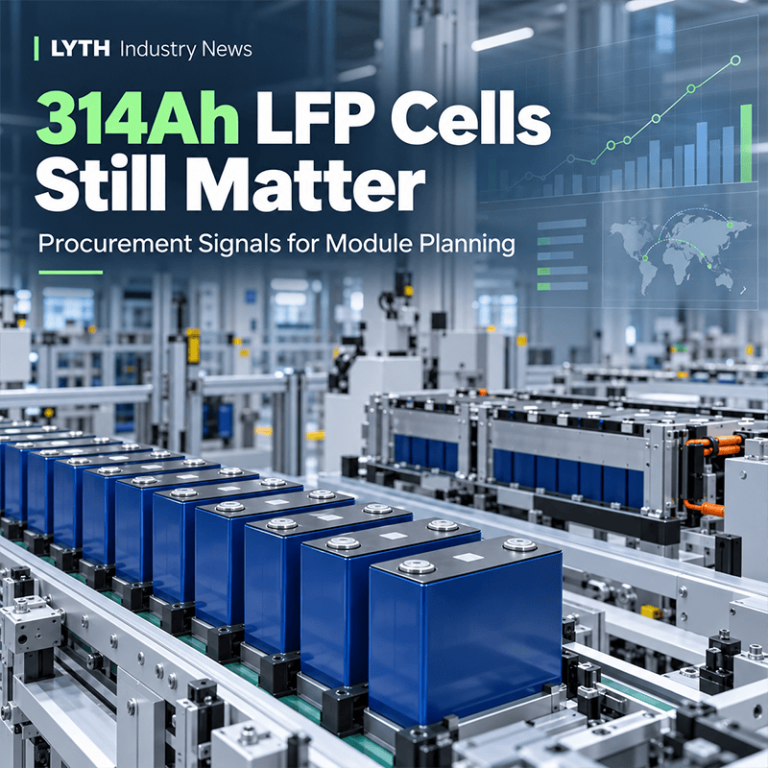 314Les cellules Ah LFP sont toujours importantes pour la planification des modules de batterie
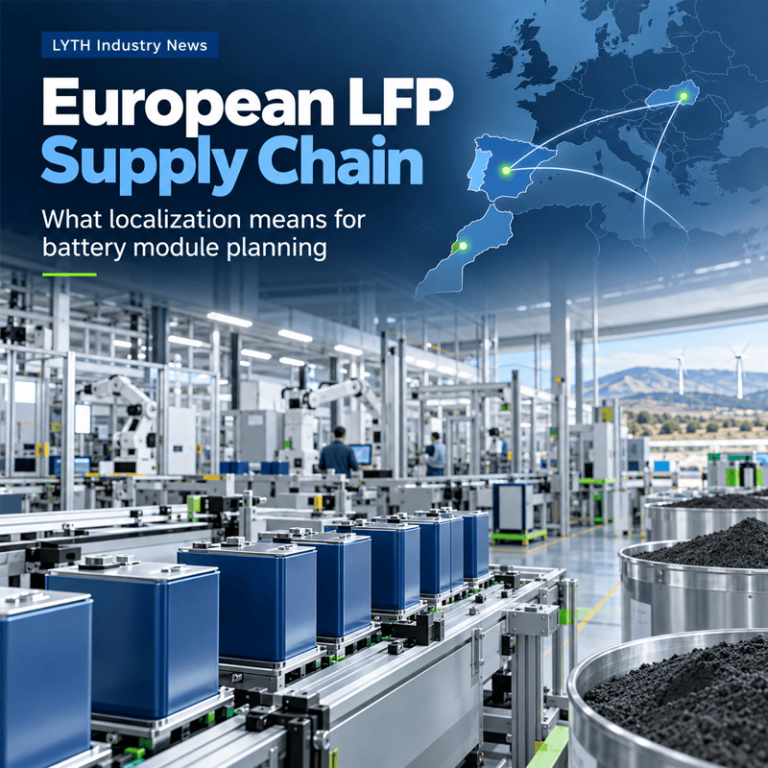 Localisation européenne des batteries LFP et planification des modules
 Packs de batteries AI pour véhicules électriques commerciaux: Quels changements la détection au niveau cellulaire pour l’intégration
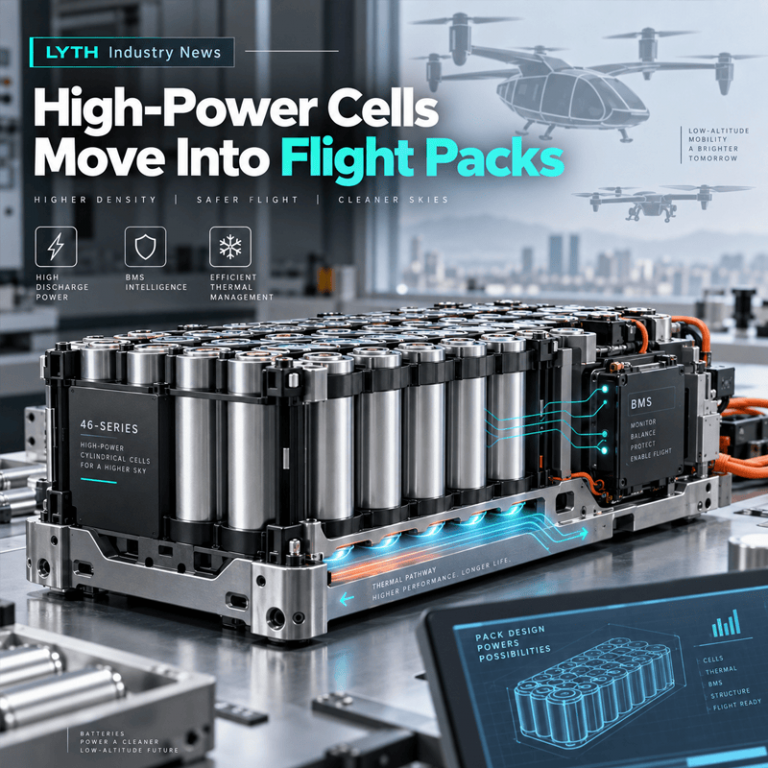 Les cellules haute puissance sont intégrées aux packs de vol: Ce dont les batteries à basse altitude ont besoin au-delà de leur capacité