The EU Battery Regulation, Regulation (EU) 2023/1542, has introduced a more complete framework for batteries placed on the European market. One of its most important digital requirements is the battery passport. Under Article 77, from 18 February 2027, each LMT battery, each industrial battery with a capacity greater than 2 kWh, and each electric vehicle battery placed on the EU market or put into service shall have an electronic battery passport.
Battery passport readiness depends on upstream supplier data because final battery or system documentation is built from information about the cells, modules, and PACK-related components used in the product. Buyers need accurate manufacturer details, model specifications, product identification, chemistry, capacity, voltage, technical documents, and traceability records before they can prepare reliable system-level summaries.
For LYTH, this is an important internal learning direction. LYTH currently handles exported battery cells with reference to EU battery regulatory requirements and customer project needs. When customers source cells, modules, or custom PACK-related products for EU-facing applications, LYTH can support the documentation process by organizing available manufacturer information, model specifications, product identification data, technical documents, and other project-relevant materials.
This support has a clear boundary. LYTH does not replace the final compliance responsibility of the battery manufacturer, importer, or system integrator placing the finished battery or system on the EU market. The final responsible party must still confirm the applicable battery category, conformity assessment route, technical documentation, labeling, CE marking, due diligence, and battery passport requirements.
LYTH sees the battery passport as a supply-chain data issue as much as a regulatory issue. The final passport may be created at the battery or system level, but its quality depends on accurate upstream information from cell, module, and PACK suppliers. LYTH’s internal learning focus is to organize available data more clearly and support customers earlier in EU-oriented project preparation.


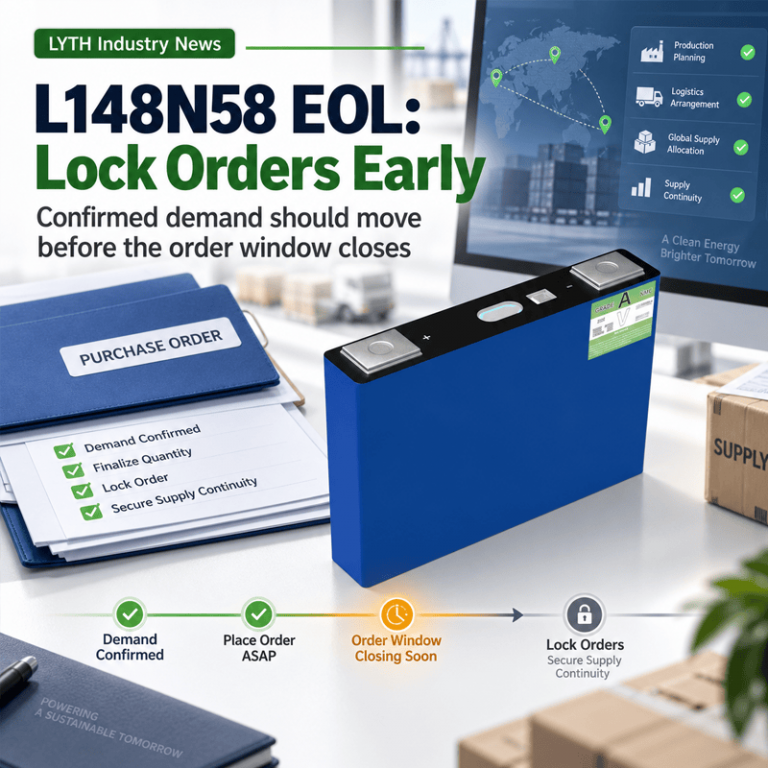 CALB L148N58 58Ah Cell EOL Notice Signals a Sourcing Planning Window for Battery Buyers
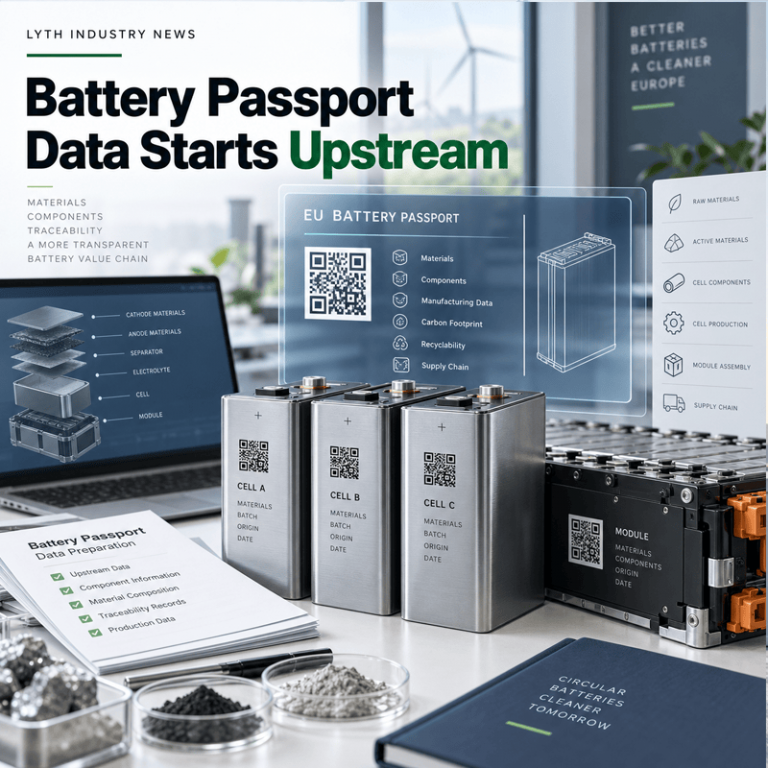 Battery Passport Readiness Starts With Better Upstream Battery Data
 587Ah Cells Shift the Question From Capacity to Module Readiness
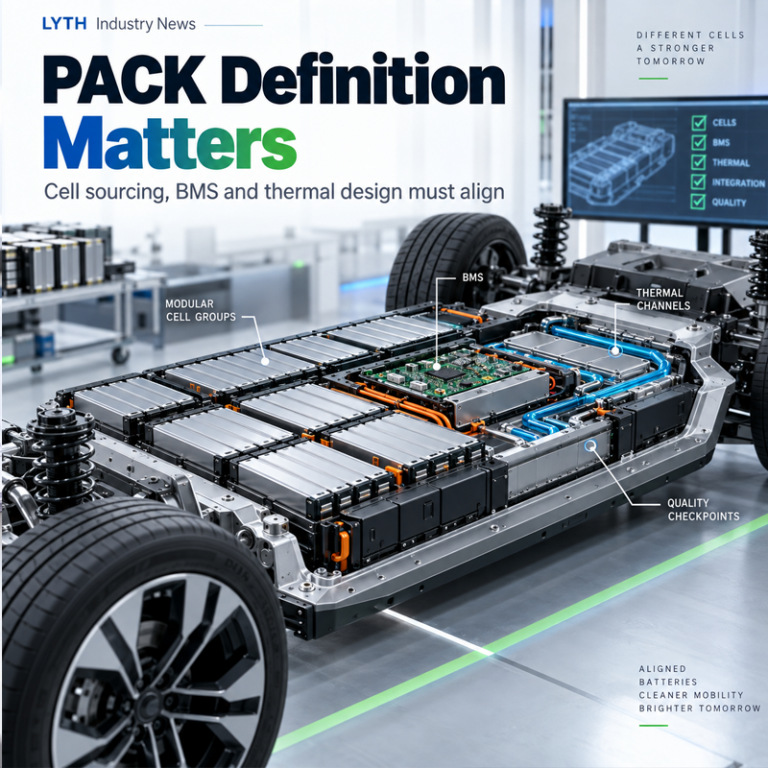 PACK Definition Matters as Automakers Separate Cell Supply From Battery-System Control
 Battery Safety Moves Into PACK Design as China Tightens Full-Chain EV Battery Risk Control