Sur July 1, 2026, La norme chinoise de sécurité des batteries de véhicules électriques mise à jour et obligatoire, GB 38031-2025, officiellement entré en vigueur. Les rapports officiels et attribuables autour de la mise en œuvre se sont concentrés sur des attentes de sécurité plus strictes au niveau du système de batterie., y compris une attention plus particulière au contrôle des événements thermiques et une logique de validation plus exigeante.
Pour l'industrie des batteries, c'est important car la pression de conformité ne s'arrête pas à la cellule. Même lorsque la plateforme cellulaire est réparée, le résultat final en matière de sécurité dépend fortement de la disposition des modules, isolation structurelle, stratégie de compression, cheminement des jeux de barres, conception de ventilation, barrières de propagation thermique, et coordination GTB. En pratique, cela signifie que les développeurs de modules et de PACK sont confrontés à une charge plus lourde de prouver que l'architecture de sécurité n'est pas seulement théoriquement solide, mais également reproductible en production.
Ce changement est particulièrement important pour les projets de conversion de véhicules électriques, plateformes de mobilité légère, électrification industrielle, et des assemblages de batteries spécifiques à une application où l'espace est limité et où le travail d'adaptation est inévitable. Les acheteurs sont susceptibles de poser des questions plus détaillées sur la correspondance module-pack., matériaux d'interface thermique, conception du boîtier, logique de réponse aux pannes, et le cheminement d'ingénierie depuis la validation des échantillons jusqu'à la construction par lots.
Pour les fabricants et les partenaires d'approvisionnement, l'implication commerciale est claire: le secteur des batteries s'éloigne du simple commerce de composants et se rapproche de la livraison appuyée par l'ingénierie. Entreprises capables de coordonner la sélection des cellules, conception de modules, Structure du PACK, et la communication de validation sera dans une position plus forte que les fournisseurs proposant uniquement des spécifications électriques nominales.
Pour LYTH, l'opportunité n'est pas de revendiquer une capacité de certification de véhicule complet, mais pour aider les clients à réduire les risques d'intégration plus tôt. Sur le marché actuel, cela signifie une communication technique plus claire, un meilleur soutien à l'adaptation, et un développement de modules/PACK plus discipliné autour de contraintes applicatives réelles.
Voir LYTH
Le juillet 1 mise en œuvre de GB 38031-2025 est un signal d'ingénierie, pas seulement un titre réglementaire. Les acheteurs apprécieront de plus en plus les fournisseurs capables de relier l'approvisionnement en cellules à la structure de sécurité des modules., Logique d'intégration du PACK, et un soutien pratique à l’adaptation.
Ce que LYTH peut faire
LYTH peut aider les clients avec la correspondance des cellules de batterie, discussion sur le développement de modules, Coordination de structure PACK sur mesure, Communication d'adaptation BMS, et une configuration de batterie orientée application pour les projets qui nécessitent un cheminement plus discipliné depuis l'examen de la conception jusqu'à la livraison réalisable..


 Intégration du stockage à double cluster: Réduction des coûts matériels ou véritable architecture électrique?
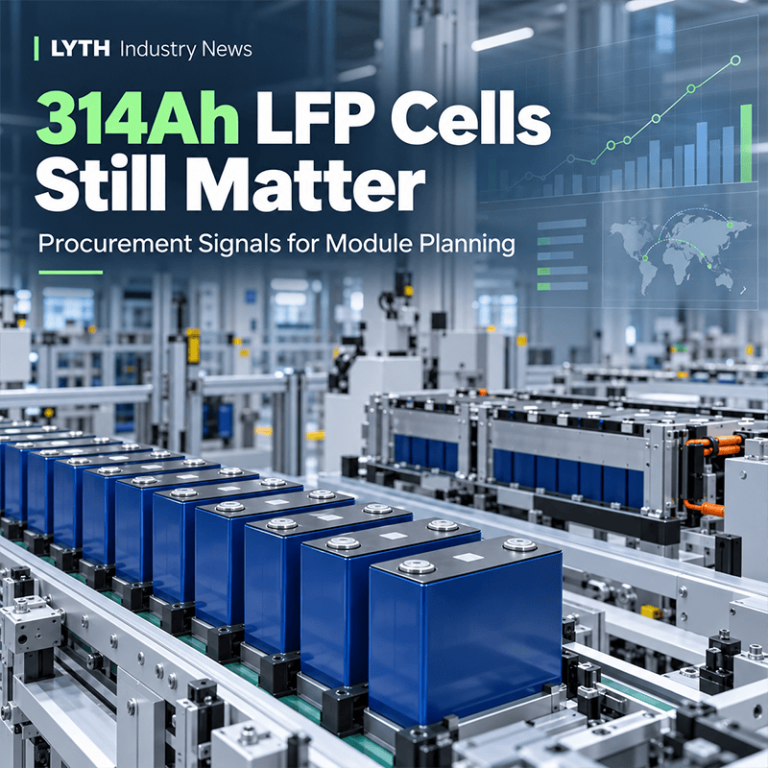 314Les cellules Ah LFP sont toujours importantes pour la planification des modules de batterie
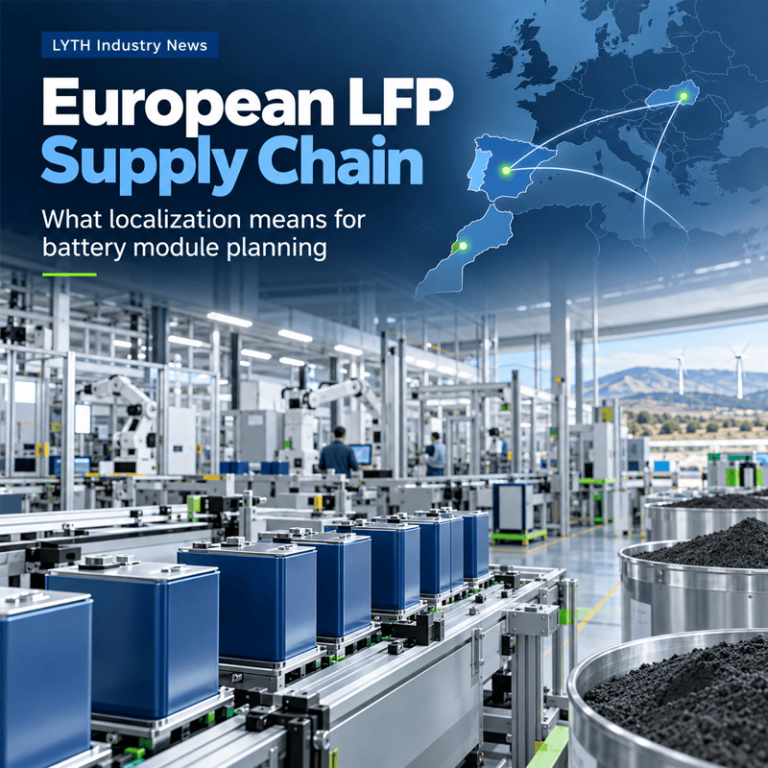 Localisation européenne des batteries LFP et planification des modules
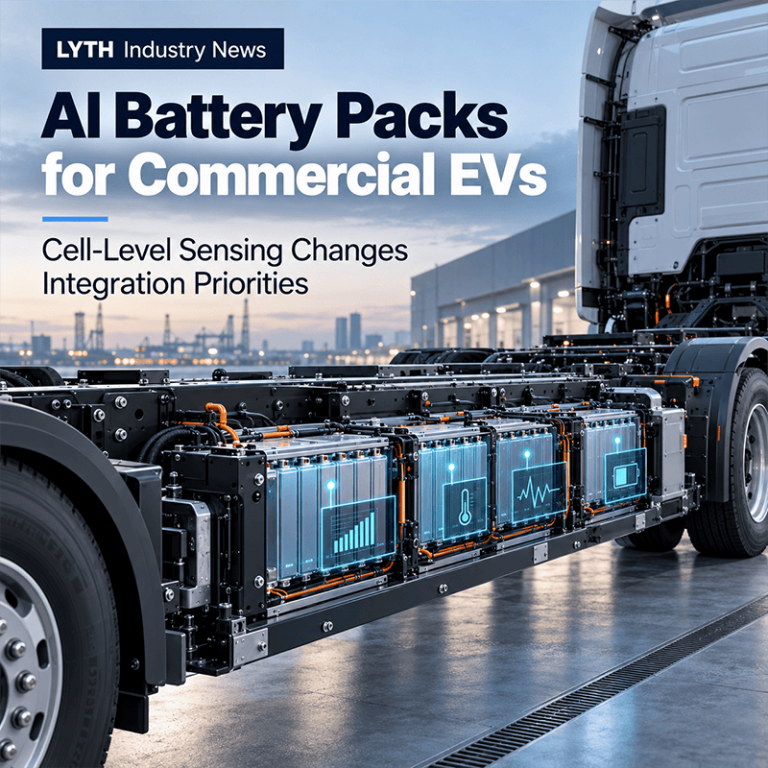 Packs de batteries AI pour véhicules électriques commerciaux: Quels changements la détection au niveau cellulaire pour l’intégration
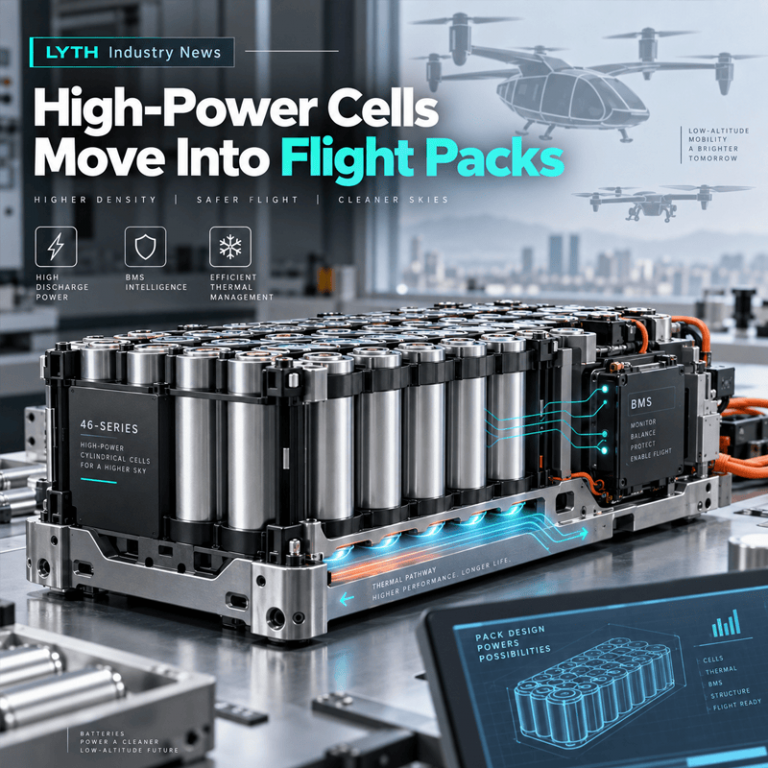 Les cellules haute puissance sont intégrées aux packs de vol: Ce dont les batteries à basse altitude ont besoin au-delà de leur capacité